Outdoor Living Built for the Mill Valley Hillside
Mill Valley is a town of redwood canopy, live oak shade, and lots that fold up the hillsides toward Mt. Tamalpais. Designing landscape here is not the same as laying out a flat suburban yard. In neighborhoods like Blithedale Canyon, Cascade Canyon, Homestead Valley, Marin Terrace, and Middle Ridge, the ground moves under you, the soil drains in ways that surprise people, and the view you are protecting is often the whole reason someone bought the property. New Key Construction treats every Mill Valley landscape as a design-build problem: one team handles both design and construction, the costs come as priced options before you commit, and you see photoreal 3D renderings of the finished grounds before a single permit is pulled. Renderings let you stand inside the decisions about elevation, retaining, and planting before the excavator arrives, so the terrace lands where you want it and the fire pit catches the afternoon light instead of the neighbor's fence.
A Landscape That Belongs to Its Setting
The homes here set the tone for the grounds around them. Downtown Mill Valley keeps its Craftsman cottages and Queen Anne lines from the old lumber-mill days. Up in the wooded canyons, cedar-shingle houses and Mid-Century Modern designs were sited to sit quietly under the trees, and the occasional A-frame tucks its roofline almost to the ground. Homestead Valley mixes early modern, Craftsman, and Mediterranean villas on the same street. A landscape that ignores all of that reads as an add-on. One that respects it feels like it was always there.
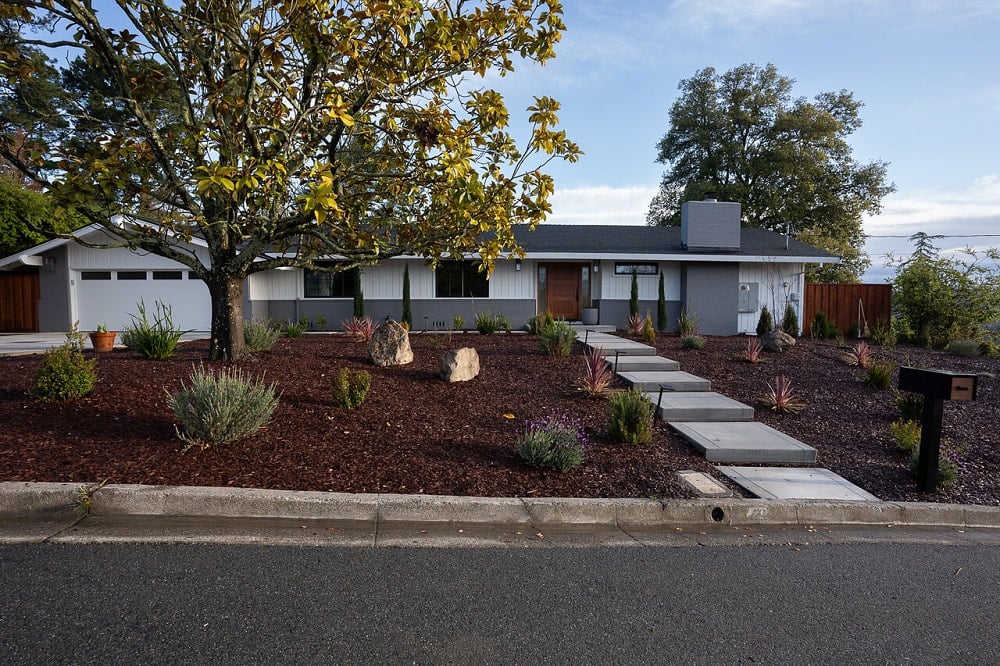
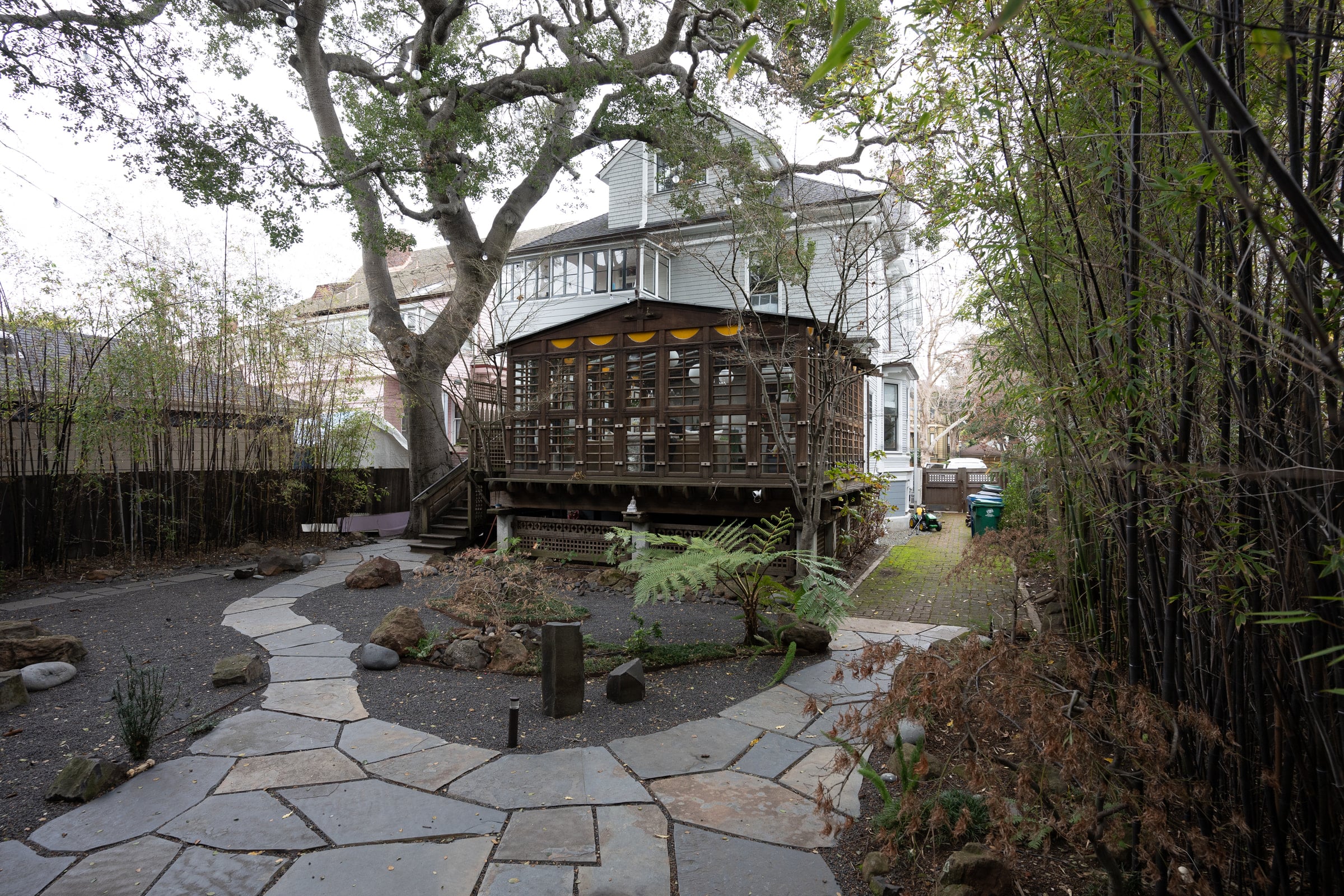
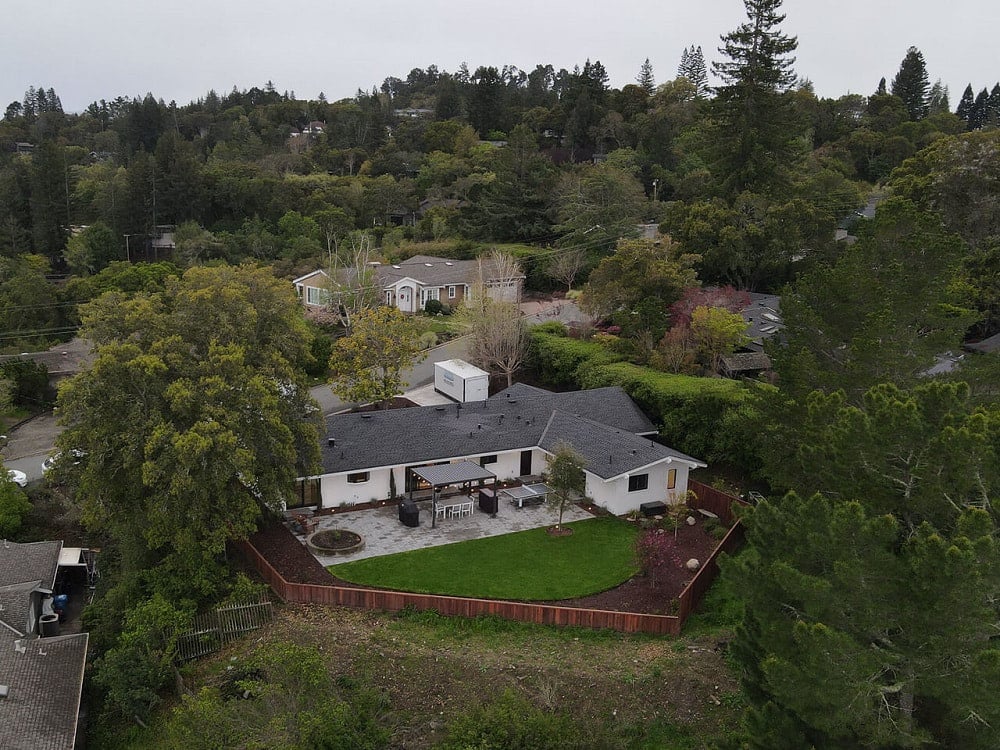
We design outdoor living that carries the architecture into the garden. That can mean board-formed concrete and Corten retaining walls for a contemporary build, dry-stacked stone and decomposed granite paths for a canyon Craftsman, or warm gravel courtyards and olive plantings for a Mediterranean-leaning home. Across all of them the work tends to share the same building blocks: level terraces and decks cut from sloping ground, outdoor kitchens and dining areas, fire features, pools and spas where the grade allows, low-voltage lighting that draws the eye to a single oak after dark, and planting designed to read beautifully while respecting the wildland edge.
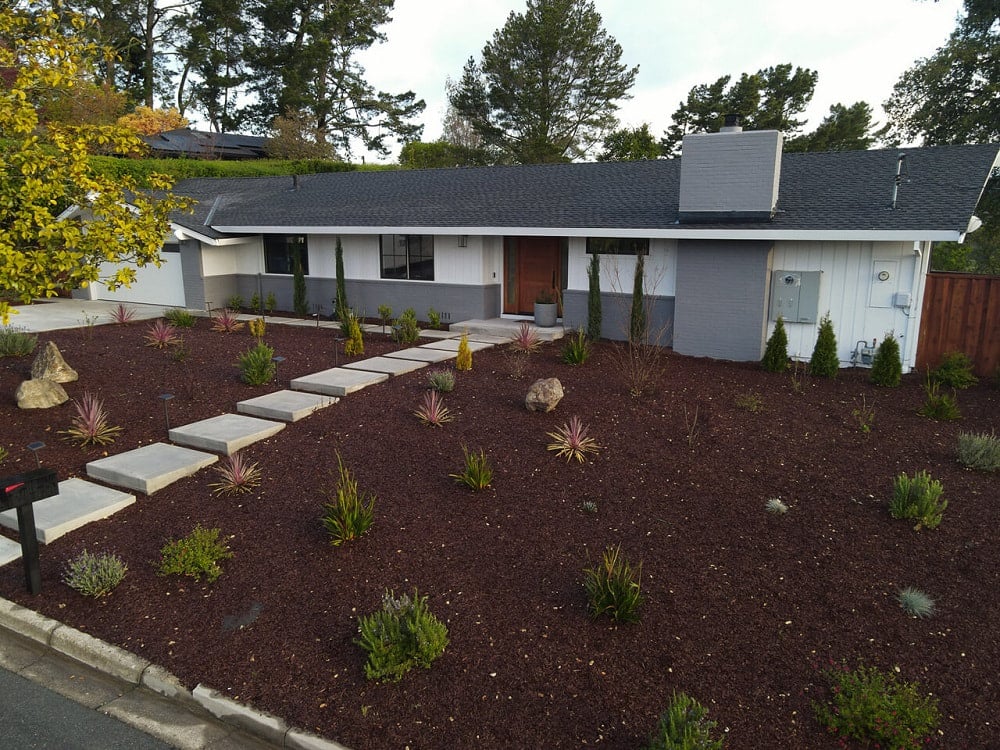
Because much of Mill Valley sits in or near the Wildland-Urban Interface, plant selection is a safety decision as much as an aesthetic one. We design defensible-space-aware planting that still looks lush, favoring drought-tolerant, California-friendly species that hold up to Marin's dry summers and the Marin Municipal Water District's water rules.
One Team From First Sketch to Final Plant
The usual landscape process splits the work. A designer draws a plan, hands it off, and a separate contractor bids it months later, often discovering that the drainage or retaining wall the drawing assumed costs far more than anyone budgeted. On a Mill Valley slope, that gap is where projects stall and budgets break. Our design-build model closes it. The same people who render your terrace price the grading, size the retaining walls, and build it. You get priced options up front, choosing between a stone terrace and a poured one with real numbers attached. White-glove project management means a single point of contact coordinates the surveyor, the arborist, any structural engineer, and the crews on site, so you are not refereeing between trades on a hillside lot.
Permits, Review, and the Marin Reality
Landscape work in Mill Valley rarely happens without the city and the county in the conversation. The City of Mill Valley's Planning Department reviews projects through its Design Review process, and landscape plans must conform to Marin Municipal Water District Ordinance 414, the district's water-efficiency rules, which is why we engage MMWD early rather than after the plan is set. Hillside lots bring additional scrutiny under the city's development standards and Marin County's hillside design provisions, especially where grading, slope, or retaining walls above a certain height come into play. Tree protection, drainage, and stormwater handling all factor in.
None of this should fall on the homeowner to untangle. We map the approvals path for your specific lot at the start, build the renderings and plan sets the reviewers expect, and keep the design within what the WUI and water rules allow, so the permit stage moves instead of stalling.
Frequently Asked Questions
Do I need a permit for a landscape project in Mill Valley?
Many Mill Valley landscape projects do, particularly anything involving grading, retaining walls, pools, or work on a hillside lot, and landscape plans must comply with Marin Municipal Water District Ordinance 414 for water use. Smaller planting refreshes may not, while terraces, structures, and drainage changes typically trigger city Design Review. We confirm exactly what your specific property requires before any design is finalized.
How long does a Mill Valley landscape project take?
From first meeting to finished grounds, most projects run several months, with design and approvals often taking as long as construction. Hillside grading, retaining walls, and the city Design Review and MMWD steps add time that flat-lot projects avoid. We give you a realistic schedule up front and manage the permit path so it moves rather than stalls.
How do you handle Mill Valley's steep, wooded lots?
We treat slope and trees as the starting point, not an obstacle. That means terracing to create usable level space, engineered retaining where grade demands it, drainage designed for Marin's wet winters, and planting that protects existing oaks and redwoods while respecting defensible-space needs in the Wildland-Urban Interface. The 3D renderings let you see how the finished landscape sits on the hillside before we build.
What does a Mill Valley outdoor living project cost?
Cost depends heavily on grade, retaining, and materials, since a hillside terrace with structural walls is a very different number than a level garden refresh. Rather than quote a generic range, we present priced options up front so you can compare real choices, like a stone terrace versus poured concrete, with actual costs attached. You decide with numbers in hand, not estimates that shift later.
Can you match the landscape to my home's architecture?
Yes, and on a Mill Valley street it is essential. We design grounds that carry your home's language outward, whether that is a Mid-Century Modern build under the redwoods, a downtown Craftsman, or a Mediterranean villa in Homestead Valley. Materials, walls, planting, and lighting are all chosen to read as one continuous design from house to garden.
Ready to see your Mill Valley grounds before the first cut into the slope? Start your project with New Key Construction and get priced options and photoreal 3D renderings from one team that designs and builds your outdoor living from start to finish.