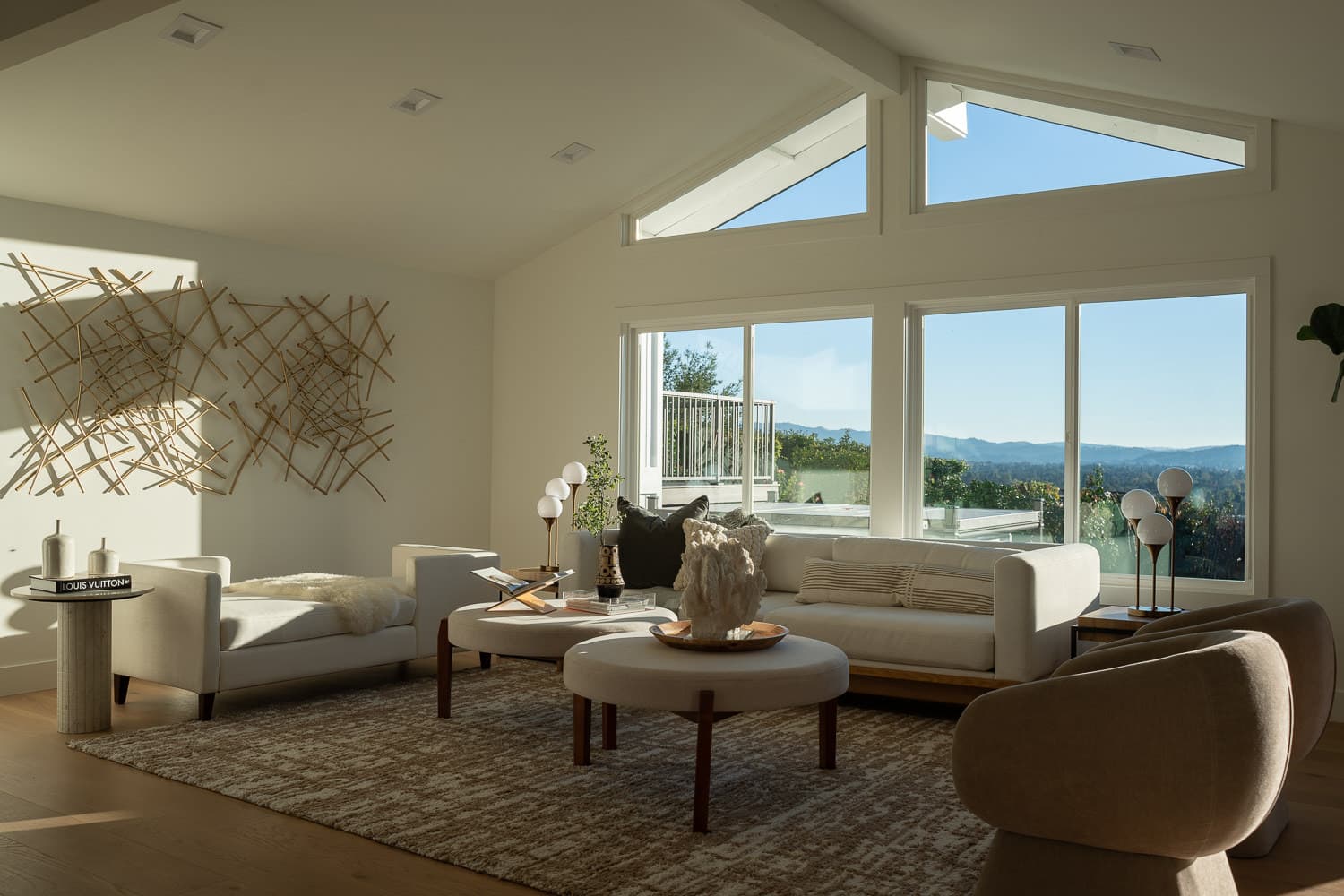
Interior design for the way Cow Hollow lives
Cow Hollow sits in the flats between Pacific Heights and the Marina, a quiet, walkable pocket of Union Street boutiques, Edwardian flats, and detached and semi-detached single-family homes on compact city lots. Many of these houses were built in the early twentieth century, which means high ceilings, bay windows, original millwork, and floor plans that were never drawn for the way people actually live now. The classic Cow Hollow interior design brief is some version of the same tension: keep the period character and the light, but open the back of the house to the kitchen, rework the primary suite, and make every square foot earn its place.
A high-end Cow Hollow client is usually not asking for a single redecorated room. They want a coherent interior that reads as one intention from the entry through to the garden, holds its resale value in one of the city's most desirable micro-markets, and survives the realities of a busy household. That means durable, beautiful materials, integrated storage, lighting that flatters the architecture, and a kitchen and bathrooms that look custom because they are. It also means a process that respects an occupied home, because most of these projects happen in a house someone is still living in.
Why design-build changes the outcome here
Most interior design in San Francisco is sold as a handoff: a designer produces a look, then you go find a contractor to price it, and the two rarely agree. On a Cow Hollow remodel that gap is expensive. Original framing, plaster, knob-and-tube wiring, and old plumbing routes are full of surprises, and a design drawn without a builder in the room tends to collide with what the house will actually allow.
New Key Construction works design-build, which means one team owns both the design and the construction. The practical differences are simple and they matter:
- One accountable team. The people who draw your interior are the same organization that builds it, so the design is grounded in real construction and real costs from day one.
- Priced options up front. Instead of a single design you cannot afford, you see options with prices attached before decisions are locked, so trade-offs are yours to make with full information.
- 3D renderings before permits. We produce photoreal 3D renderings of your interior before you commit to the permit and construction phase, so you are approving a space you can actually see, not a mood board.
That sequence protects the budget and the schedule. You resolve the look, the layout, and the number while everything is still pixels, which is the cheapest possible place to change your mind.
The Cow Hollow interior, room by room
The work that defines these homes is consistent. Kitchens get opened to the rear and to light, with cabinetry and stone selected to sit comfortably against Edwardian bones. Primary suites are reconfigured to add a real bathroom and closet without losing the proportions of the original rooms. Living and dining spaces are tuned for entertaining, with custom built-ins, fireplaces, and lighting plans that make the architecture the feature. Because lots are narrow and ceilings are tall, the best Cow Hollow interiors win on verticality, storage, and the careful editing of finishes rather than on raw square footage.
Material choices lean toward the warm and tactile rather than the cold and trend-driven, because these interiors are meant to last. We specify with maintenance, light, and the specific room in mind, and we detail the transitions, the millwork, the tile, and the hardware so the finished space feels resolved instead of assembled.
The San Francisco permit reality
Interior design in Cow Hollow rarely stays purely cosmetic. The moment a project touches walls, plumbing, electrical, or layout, it enters San Francisco's permitting process through the Department of Building Inspection. Cosmetic refreshes such as paint, finishes, and furnishings generally move quickly, but structural changes, new bathrooms, kitchen relocations, and anything affecting the building envelope or the exterior carry real review timelines, and work on older homes can trigger additional scrutiny.
San Francisco's process is known for being more involved than neighboring jurisdictions, and timelines vary with the scope. This is exactly where the design-build, renderings-first approach pays off. Because we plan the construction and the interior together, the permit set reflects a design that is already costed and already visualized, which reduces the surprises that stall a project after work begins. We never invent a timeline or a fee for you; we tell you which parts of your scope are likely to need permits and design the process around that reality.
Working with New Key Construction
We start by understanding how you actually use the home, then move into design with priced options, then into 3D renderings you can walk through and adjust, and only then into permitting and construction with the same team carrying it through. One relationship, one source of truth, from the first sketch of your Cow Hollow interior to the final styling.
FAQ
Do I need permits for an interior design project in Cow Hollow?
It depends on scope. Purely cosmetic work like paint, furniture, and finishes typically does not, but anything that moves walls or changes plumbing, electrical, or layout generally requires permits through San Francisco's Department of Building Inspection. We review your scope early and tell you plainly which parts will need review so there are no surprises.
What makes design-build different from hiring a designer and a contractor separately?
With design-build, one team owns both the design and the construction, so your interior is grounded in real costs and real construction from the start. You get priced options up front and there is no gap between a beautiful design and a builder who says it cannot be done for the money.
Can I see the design before committing to construction?
Yes. We produce photoreal 3D renderings of your interior before the permit and construction phase, so you approve a space you can actually see. Resolving the look, layout, and budget while the project is still a rendering is the least expensive place to make changes.
Do you work in occupied homes?
Most Cow Hollow interior projects happen in homes people are still living in, and we plan the work and the phasing around that. The design-build model helps here too, because one team coordinates the schedule, the trades, and the disruption instead of leaving you to manage the gaps.
How do you handle the character of an older Cow Hollow home?
We design new interiors to sit comfortably with the original architecture, keeping the light, proportions, and millwork that give these homes their value while adding the kitchens, baths, storage, and layouts a modern household needs. The goal is an interior that reads as one intention, not a period house fighting a contemporary remodel.