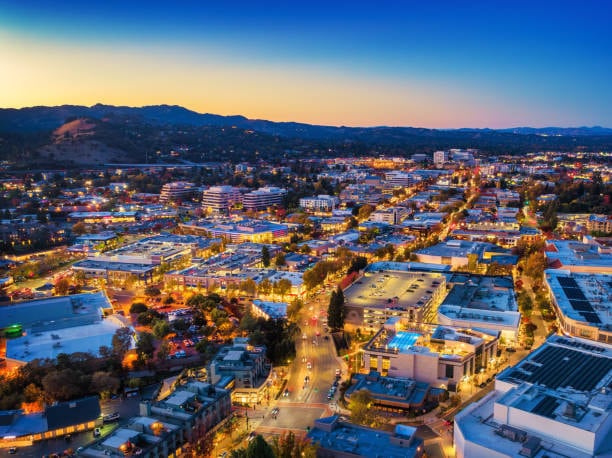
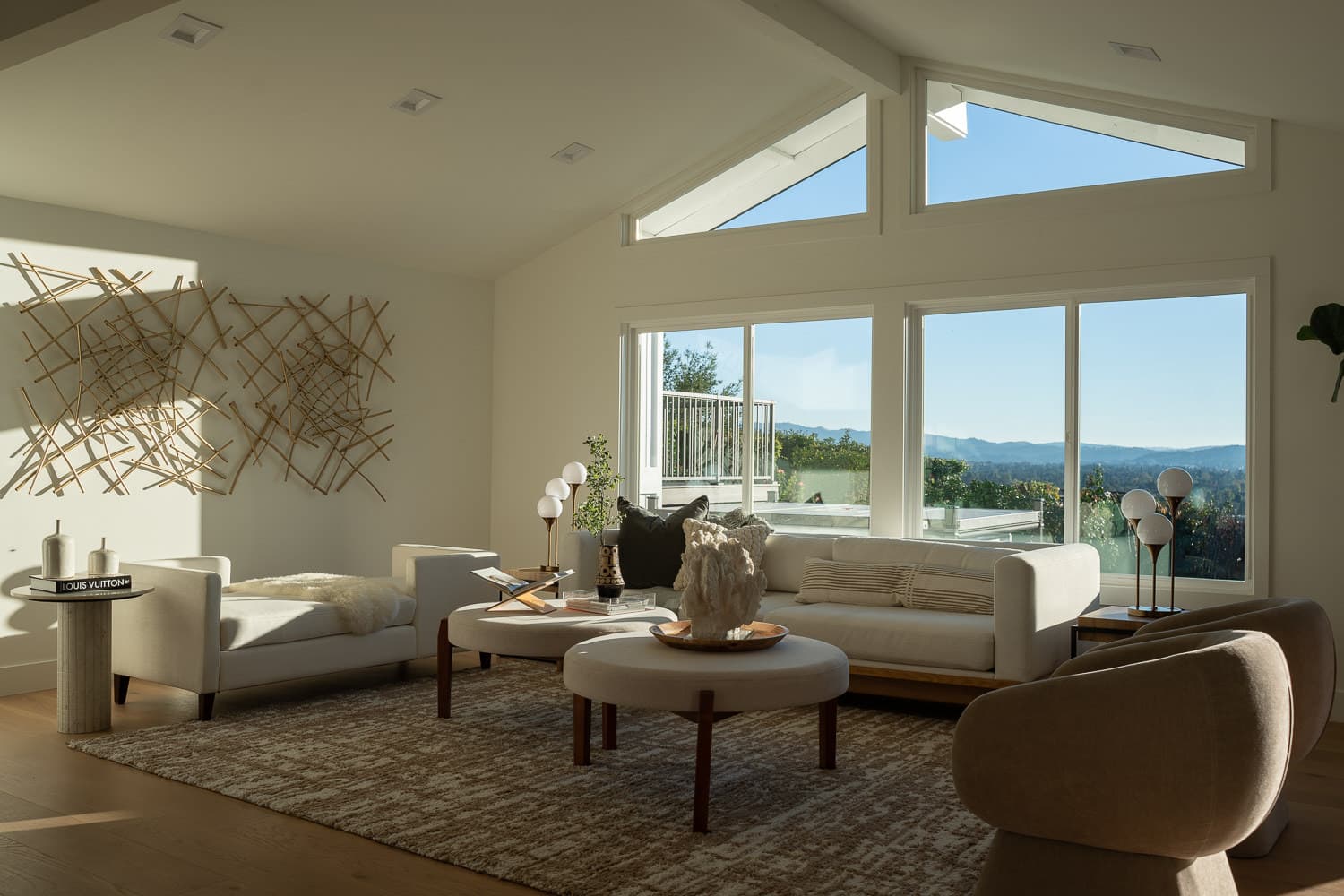
Portola Valley is one of the most demanding places in the Bay Area to design an outdoor space, and that is exactly why it rewards doing it well. The homes here tend toward the quiet end of luxury: low-slung organic-modern and ranch-influenced houses set into oak-studded hillsides, with cedar, board-formed concrete, steel, and glass that want to disappear into the land rather than dominate it. A high-end Portola Valley client rarely wants a showy resort backyard. They want an outdoor living environment that feels like an honest extension of the house and the terrain, terraced patios that follow the slope, a pool that reads as still water in the landscape, native and drought-adapted planting under the existing canopy, and evening lighting that respects the dark, rural feel of the town.
What outdoor living means on a Portola Valley hillside
Almost nothing here is flat. Real landscape design in Portola Valley starts with grade, not with a furniture plan. The interesting work is in how you move between elevations, retaining walls and seat walls, board-formed concrete steps, decomposed granite or stone terraces, and decks that cantilever out toward a view. Outdoor living spaces get built around that vertical reality: a sheltered dining terrace off the kitchen, a fire feature on a lower level, an outdoor kitchen tucked where the prevailing afternoon wind will not chase you off it. Because so many lots sit under heritage oaks, planting design has to work in dappled shade and protect root zones, which pushes toward native and Mediterranean-climate palettes, permeable surfaces, and careful drainage rather than thirsty lawn.
The local planning reality you should plan around
Portola Valley's rural, hillside character is written into how the Town reviews projects, and outdoor living work touches several of those rules directly. A few realities to design around:
- Hillside and geologic review. Much of the town sits in geologic and seismic hazard areas, and the Town's process can require geotechnical input for grading, retaining walls, pools, and structures on slopes. Pools and large terraces are not just landscape items here, they are engineered elements on moving ground.
- Tree protection. Significant and heritage trees, especially native oaks, are protected, and work within their root zones is reviewed. A good plan locates patios, footings, and trenching to avoid harming protected trees in the first place.
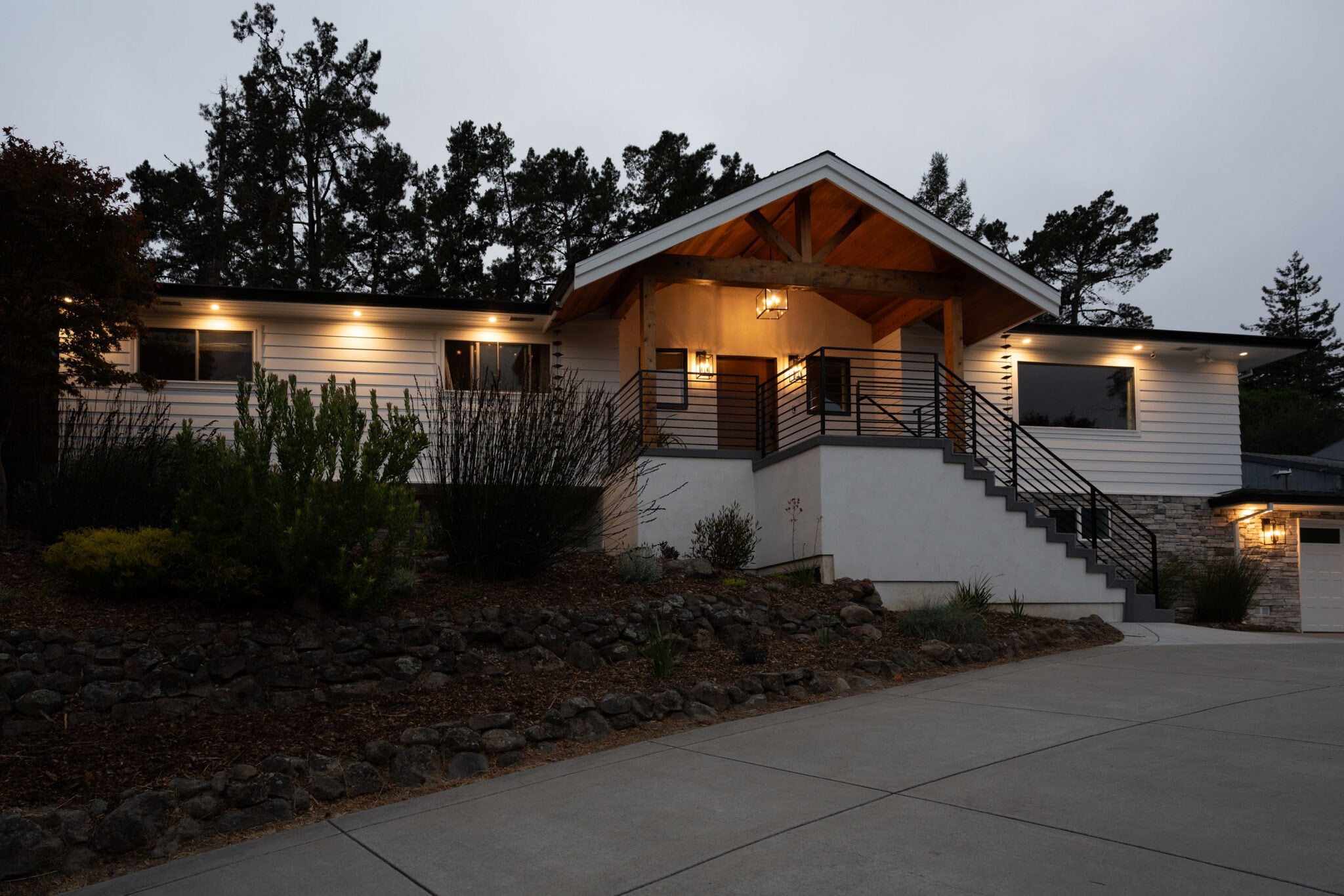
- Dark-sky and rural lighting expectations. The Town values its night sky and rural darkness, so exterior lighting is meant to be restrained, shielded, and low. Outdoor lighting design here is about pools of warm light at steps and seating, not floodlit yards.
- Site disturbance, grading, and drainage. Cut and fill, impervious coverage, and how stormwater leaves your site all get attention on hillside lots. Designing with permeable paving and on-site drainage usually makes both the review and the land happier.
We do not guess at the specific numbers, thresholds, or fees for your parcel. We confirm them with the Town and your geotechnical and arborist consultants as part of the design phase, so the plan you approve is the plan that can actually get permitted.
Why design-build is the right model here
On a constrained hillside lot, the gap between a beautiful landscape drawing and a buildable one is where most projects lose time and money. We close that gap by keeping design and construction under one roof.
- One team for design and build. The people drawing your terraces, walls, pool, and planting are accountable for building them. No handing a design to a separate contractor who discovers the slope, the soils, or the tree roots make it impractical.
- Priced options up front. Before you commit, you see real options with real numbers, this patio material versus that one, full outdoor kitchen versus a grill station, spa now or roughed in for later. You make decisions with the cost in front of you, not after.
- 3D renderings before permits. We model your outdoor living spaces in 3D so you can walk the terraces, sightlines, and planting before anything goes to the Town or into the ground. It is far cheaper to move a fire feature in a rendering than after the concrete is poured.
What we design and build outdoors
Our landscape and outdoor living scope in Portola Valley typically includes terraces and patios, decks, retaining and seat walls, outdoor kitchens and dining areas, fire features, pools and spas, native and drought-tolerant planting design, irrigation and drainage, low-impact dark-sky-friendly lighting, and the grading and hardscape that ties it all together with the house. Because we also do the architectural and interior side, indoor and outdoor flow gets designed together, the kitchen that opens to the dining terrace, the great room that lines up with the view, the material language that carries from inside to out.
How a project starts
We begin with a walk of your property to read the slope, the trees, the views, and the way light and wind move across the site. From there we develop a concept, confirm the planning and geotechnical realities with the Town and consultants, and bring you priced options and 3D renderings before any permit application. You approve a clear scope and budget, then the same team builds it.
FAQ
Do I need geotechnical or arborist review for a landscape project in Portola Valley?
Often, yes. On hillside lots, grading, retaining walls, pools, and terraces can trigger geotechnical review, and work near protected oaks and heritage trees can require an arborist. We coordinate those consultants during design rather than discovering the requirements mid-build, and we confirm what your specific parcel needs with the Town instead of assuming.
Can I have a pool or outdoor kitchen on a sloped lot?
Usually, with the right engineering. Pools, spas, and outdoor kitchens are very achievable on Portola Valley slopes, they just need to be treated as engineered elements tied into retaining and drainage rather than dropped onto the grade. The 3D model and priced options stage is where we confirm what works and what it costs before you commit.
How does the dark-sky lighting expectation affect my outdoor design?
It shapes the lighting toward warm, shielded, low-level fixtures that light the paths, steps, and seating you actually use, rather than broad floodlighting. Most clients prefer this anyway, it feels more like the rural character of the town and makes evenings outdoors more comfortable.
What makes design-build different from hiring a landscape architect and a contractor separately?
With design-build, one team owns both the design and the construction, so the plan you fall in love with is also the plan that gets built, on budget. You get priced options and 3D renderings up front, and there is no finger-pointing later between a designer and a separate builder when the slope or soils complicate things.
Do you handle the planning and permit process with the Town?
Yes. We confirm the relevant hillside, tree, grading, drainage, and lighting requirements for your project with the Town and the right consultants, and we prepare the design so it is ready to permit. We do not invent or promise specific approvals, we design to the real rules and manage the submittal.