Custom home builds in Portola Valley, CA
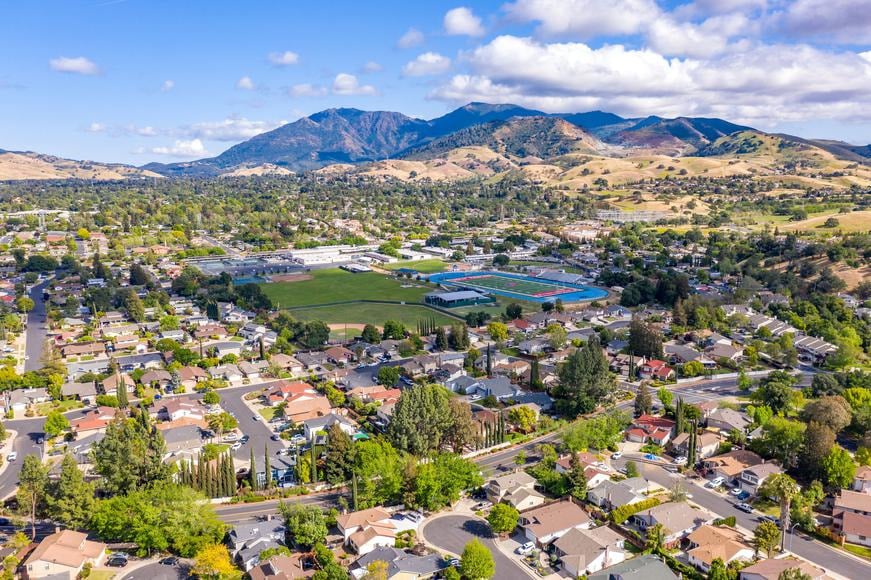
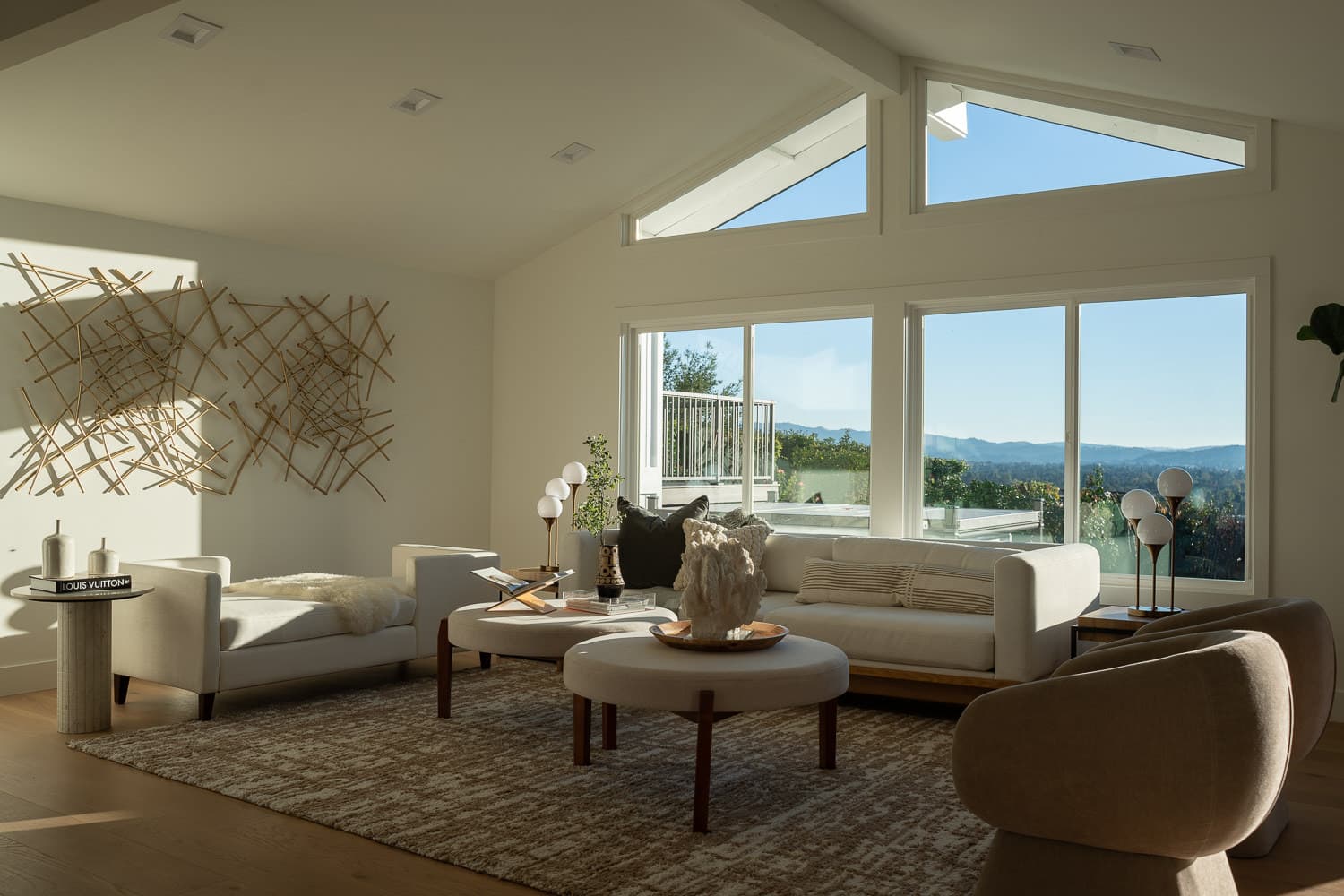
Portola Valley is a town that asks more of a home than almost anywhere else on the Peninsula. The lots here run up into the oak woodland and grassland of the foothills, and the houses that belong on them tend to share a language: low horizontal rooflines, deep eaves, walls of glass that open to a ridgeline or a stand of heritage oaks, and natural materials like wood, stone, and board-formed concrete that read as quiet rather than showy. The organic-modern look that has become shorthand for "Portola Valley" is not a trend here so much as a response to the land. People who build in this town generally want the same thing: a home that disappears into its setting, brings in light and view without fighting the hill, and feels handcrafted instead of mass-produced.
That ambition is exactly why building here is harder than building on a flat suburban lot. A custom home in Portola Valley is a design problem and a land problem at the same time, and the two cannot be solved separately.
What makes building in Portola Valley different
Most of the buildable land in Portola Valley is sloped, and a sloped lot changes everything about how a house gets designed and approved. Grading, drainage, retaining, and where you can actually place a foundation all become early questions, not afterthoughts. The town sits in a seismically active part of the Bay Area near the San Andreas fault zone, so geologic and geotechnical review is a normal part of building on many parcels. Expect soils and geology work to inform the structure, the foundation type, and sometimes the footprint itself.
Portola Valley also takes its rural, wooded character seriously, and that shows up in the rules. Tree protection matters, and significant or heritage trees can shape where a house sits and how a driveway is routed. The town has long valued dark skies, so exterior lighting tends to be modest, shielded, and downward-facing rather than bright and decorative. Site design review is a real step for new homes and larger projects, with attention to how a structure fits its slope, how visible it is from surrounding areas, and how it treats the natural setting. Setbacks, lot coverage, height limits, and floor-area expectations all interact with the topography, so two lots of similar size can support very different homes.
None of this is a reason not to build. It is a reason to design with the constraints in front of you from day one. The projects that go smoothly are the ones where the architecture, the engineering, and the site realities were reconciled before anyone applied for a permit. The projects that stall are usually the ones where a beautiful design met the hillside, the trees, or the geology for the first time at the planning counter.
The design-build difference
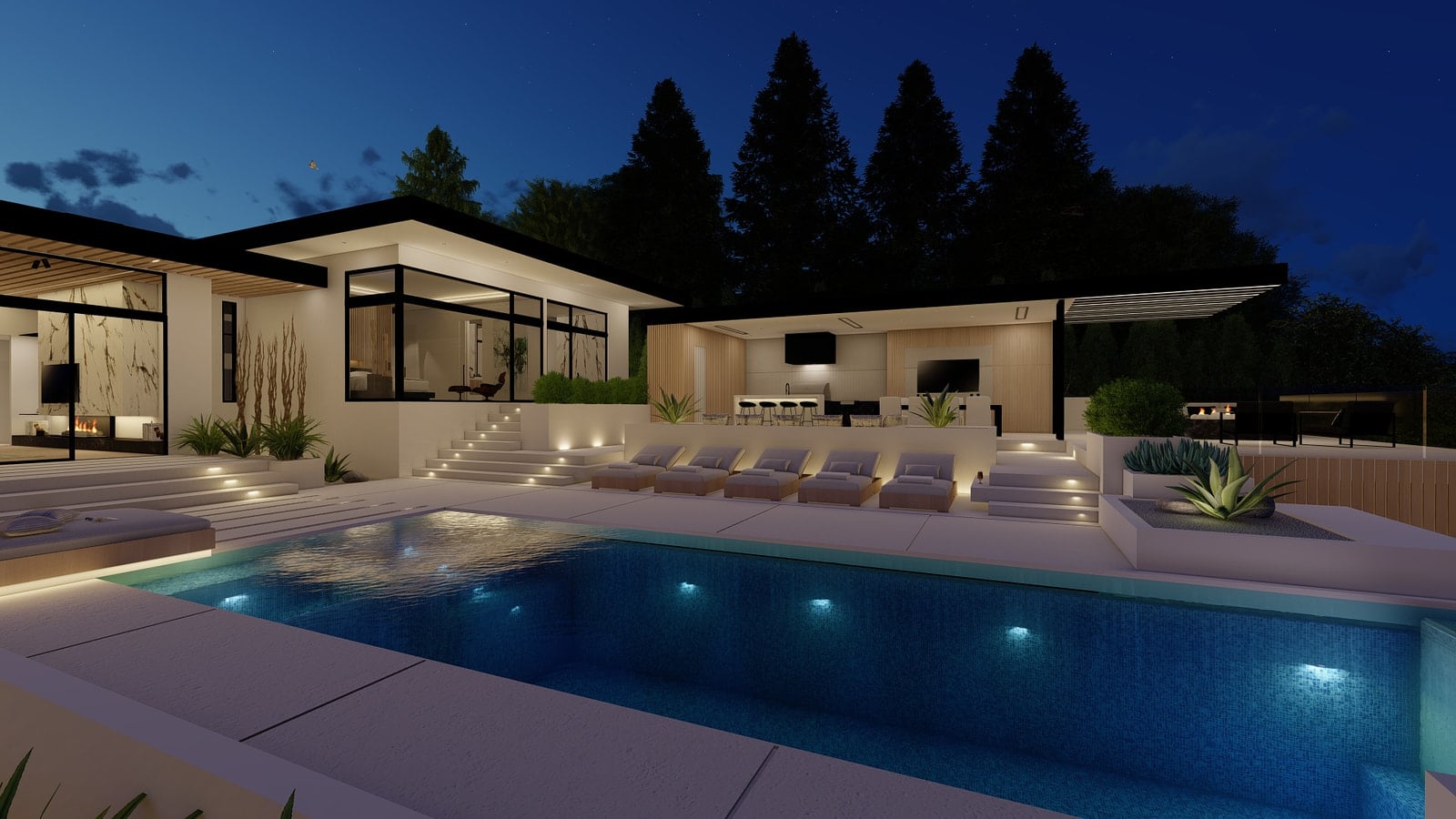
Here is the part we want you to remember. With New Key Construction you get one team for design and build, priced options up front, and 3D renderings before you commit to permits.
That structure is built for a place like Portola Valley. Because the same firm carries your project from first sketch to final walkthrough, the people designing the rooflines and the window walls are the same people who know what that hillside foundation, that retaining strategy, and that material palette actually cost to build. You are not handed a gorgeous set of drawings and then left to discover, months later through a separate bidding process, that the design was never realistic for the lot or the budget.
Instead, we develop the design and the construction plan together. You see real, priced options while choices are still easy to change. You walk through photorealistic 3D renderings of the actual house, on your actual site, so the home is something you have already experienced before you commit money to permits and engineering. And because one team owns both halves, there is no finger-pointing between an architect and a builder when the hillside or the review process throws a curveball. Accountability stays in one place.
How we work on a Portola Valley project
We start by understanding the lot as much as the wish list: the slope, the views, the trees, the access, and what the site will and will not allow. From there we move into design, pairing the organic-modern character clients want with the structural and geologic realities of building in the hills. We bring in the engineering and site consultants the project needs, model the home in 3D so you can see and adjust it, and put pricing against real options. Only once the design is resolved and you have signed off do we take it into permitting and review. Then the same team builds it, with one schedule and one point of contact the whole way through.
FAQ
Do you build custom homes in Portola Valley?
Yes. We design and build custom homes and high-end remodels in Portola Valley and across the Peninsula. Because we are a design-build firm, one team handles everything from the first concept through construction, which is especially valuable on the town's sloped, view-sensitive, geologically reviewed lots.
How does design-build work?
Design-build means a single company is responsible for both the design and the construction of your home. Rather than hiring an architect, then bidding the drawings out to separate builders, you work with one team that designs the home, prices real options as you go, shows you 3D renderings, and then builds what you approved. It keeps cost reality and design ambition in the same conversation and puts accountability in one place.
What does a high-end remodel or custom home in Portola Valley cost and how long does it take?
High-end work in Portola Valley varies widely with the lot, the slope, the scope, and the level of finish, so we do not quote a number sight unseen. What we can promise is honesty about it early: you see priced options during design instead of a single surprise figure at the end. Hillside sites, geologic and geotechnical review, and site design review also affect timeline, which is exactly why we resolve design and pricing before entering permits, so the schedule is built on a realistic plan rather than an optimistic one.
Why is building in the Portola Valley hills more involved than on a flat lot?
Sloped lots bring grading, drainage, and foundation decisions to the front of the process, and the area's seismic setting near the San Andreas fault means geologic and geotechnical review is common. Tree protection, dark-sky lighting expectations, and site design review all influence where and how a home can be built. Designing with these factors from the start is what keeps a project on track.
Can you match the organic-modern style Portola Valley is known for?
Absolutely. Low rooflines, deep overhangs, indoor-outdoor flow, and natural materials like wood, stone, and concrete are central to how homes here relate to the landscape. We design to that character while making sure the result is buildable on your specific hillside lot, then build it with the same team that drew it.