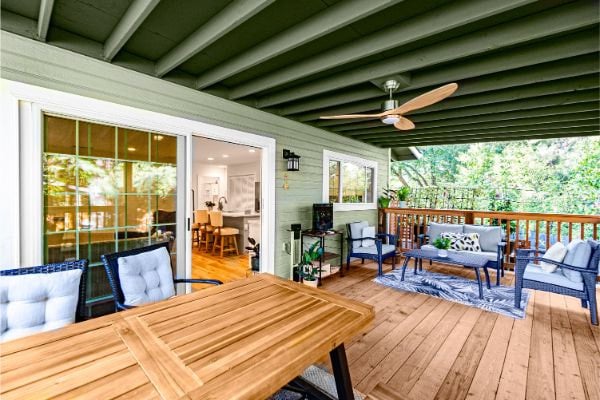
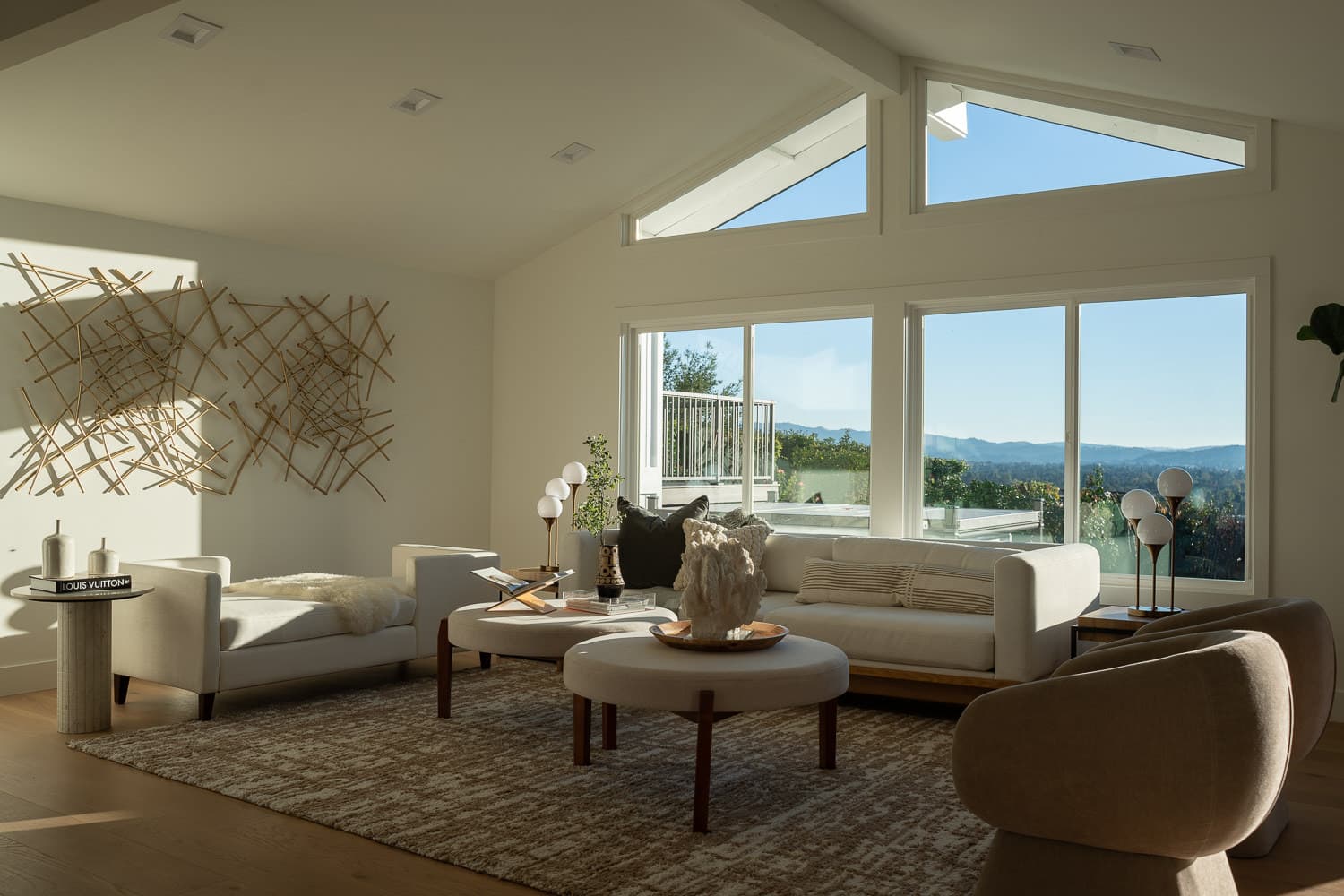
Portola Valley is a town of wooded hillsides, large lots, and homes that try hard not to fight their surroundings. Many properties here are sloped, screened by oaks and bays, and set back from quiet roads with no sidewalks and no streetlights. The people who live here tend to want an accessory dwelling unit that reads as part of the land rather than an addition bolted onto it: low and horizontal, warm materials, big quiet glass, and an organic-modern restraint that suits the setting. That is the kind of ADU design and construction we focus on in Portola Valley, and it is a very different problem from dropping a prefab box on a flat suburban pad.
What a Portola Valley ADU actually has to deal with
The hard parts of an ADU here are rarely the cabinets. They are the site. Sloped lots mean grading, retaining, and foundation decisions that drive a large share of the budget, and a unit that looks effortless usually sits on engineering that is anything but. Portola Valley also takes its natural setting seriously. Tree preservation matters, so the position of a unit is often negotiated around protected trees and their root zones rather than the other way around. The town's dark-sky sensibility means exterior lighting is something to design with intention, shielded and minimal, not an afterthought specified at the end.
Then there is the ground itself. This part of the Peninsula is geologically active, with fault zones nearby, so geologic and seismic review is a normal part of building rather than an edge case. An ADU on a hillside parcel can trigger soils and geotechnical work, and the structural design has to answer to it. None of this is a reason to avoid building. It is a reason to design with the site constraints in front of you from day one, instead of discovering them after you have fallen in love with a floor plan that cannot be built where you wanted it.
We will not quote you a specific fee schedule or permit timeline on this page, because those move and depend on your parcel. What we will tell you plainly is that an ADU in Portola Valley lives or dies on early site analysis, and that is where our process starts.
The design-build difference
Most ADU projects are slowed down by the gap between the people who draw and the people who build. You hire an architect, wait, then hand a set of drawings to contractors for bids, and discover the design you paid for costs far more than you expected. Then you redesign. New Key Construction is a design-build firm, which means one team carries your ADU from first sketch through final walkthrough.
That changes three things in practice. First, you get priced options up front. When we show you a layout or a roofline or a material choice, we show you what it costs to build, so design decisions are made with real numbers instead of hope. Second, you see 3D renderings before permits. You walk through your ADU visually, see how light lands in the main room and how the unit sits against the slope and the trees, and make changes while changes are cheap. Third, accountability does not get split. The team that promised the design is the team that builds it, so the renderings and the budget are not someone else's problem once construction starts.
What ADU design and construction with us looks like
We begin with the site, not the floor plan. We look at slope, access, trees, setbacks, utility runs, and the likely geologic and seismic review your parcel will need, and we use that to shape what is genuinely buildable and what it should cost. From there we design the unit itself: a detached ADU tucked into the grade, a garage conversion, or an addition-style unit attached to the main house, depending on what your property and goals support.
As the design develops, you see it in 3D and you see it priced. We refine materials, the relationship to the main residence, the glazing, and the shielded exterior lighting that keeps the property dark-sky friendly. Once the design is settled and you have signed off on a number, we prepare the documents and engineering needed for permitting, then build. Because the same firm runs both halves, the unit you approved on screen is the unit that gets framed, finished, and handed back to you.
A well-built ADU in Portola Valley earns its keep for decades, as a guest house, a home office set apart from the main residence, multigenerational living, or rental income. It deserves to be designed and built by one team that took the site seriously from the first conversation.
FAQ
What kinds of ADUs do you build in Portola Valley?
Detached units, garage conversions, and attached or addition-style units. Which one fits depends on your lot's slope, access, tree locations, setbacks, and how the unit needs to relate to the main house. We work through those constraints with you before recommending a type, so the design is grounded in what your specific parcel can actually support.
How does design-build save time and money on an ADU?
One team handles design and construction, so you are not paying to redesign after a separate contractor's bid comes in over budget. You get priced options as the design develops and 3D renderings before permits, which means costly surprises are caught on screen rather than on the job site. Fewer handoffs also means fewer delays between drawing and building.
Will my hillside lot or the area's seismic conditions be a problem?
Not a problem, but a real design input. Sloped lots and the region's geologic and seismic review shape the foundation, grading, and structural approach, and they affect cost. We assess this early so the design accounts for it from the start, rather than treating it as a surprise discovered after you have committed to a layout.
Can I see what my ADU will look like before construction?
Yes. You see 3D renderings before permits, so you can walk through the layout, light, materials, and how the unit sits against the slope and trees while changes are still easy and inexpensive to make. We refine the design with you until it is right, then build the unit you approved.
Why does the dark-sky and tree character of Portola Valley matter for my ADU?
Because it shapes both where the unit goes and how it is detailed. Tree preservation often guides placement around protected trees and their roots, and the town's dark-sky values mean exterior lighting should be shielded and minimal by design. Handling these well keeps your ADU in character with the property and the town instead of working against them.