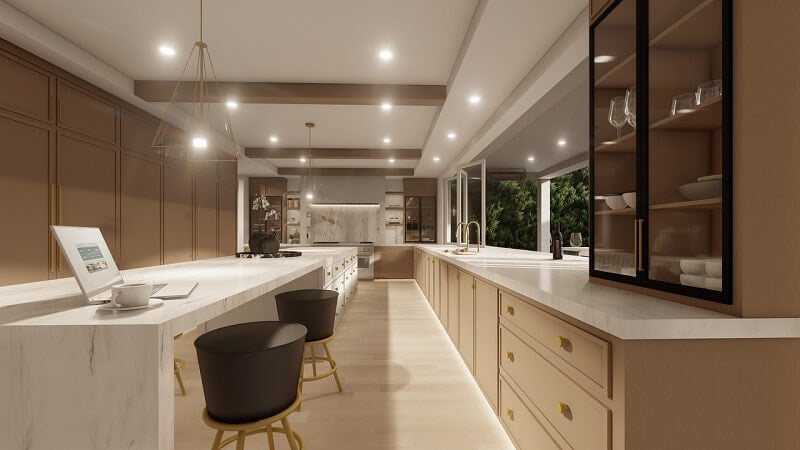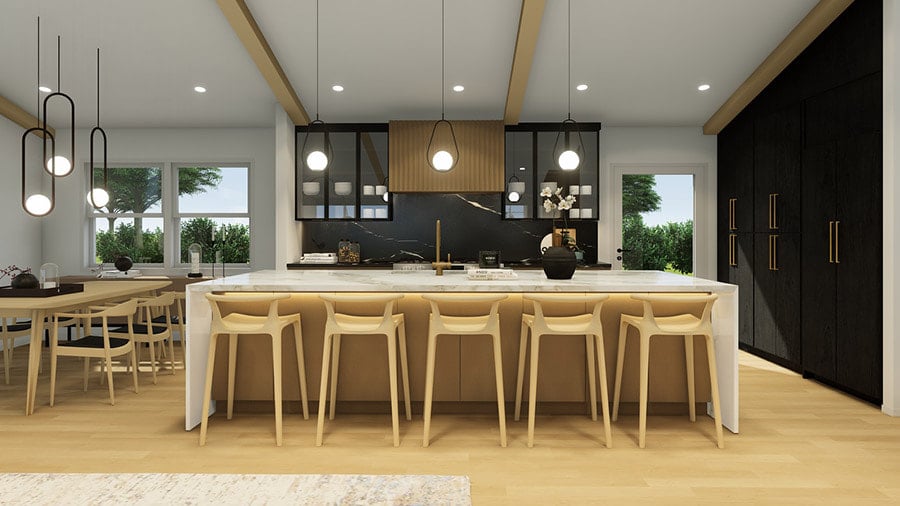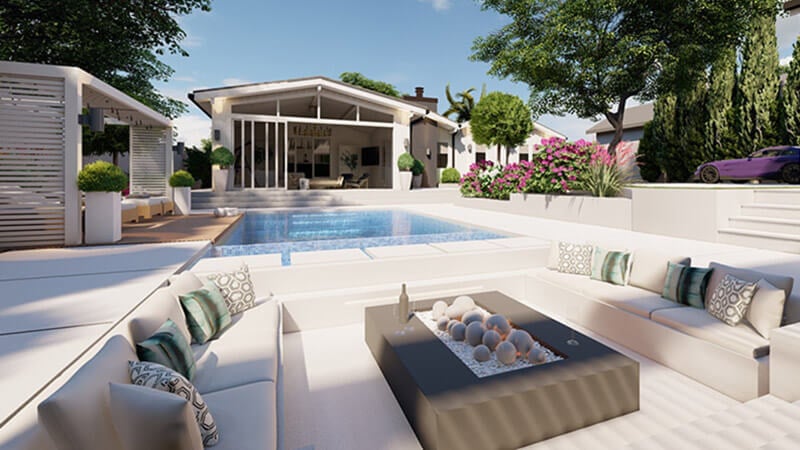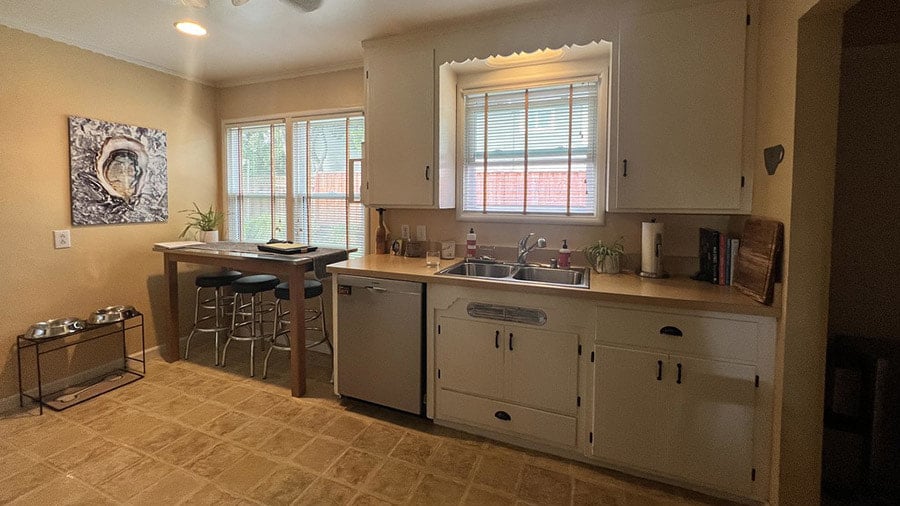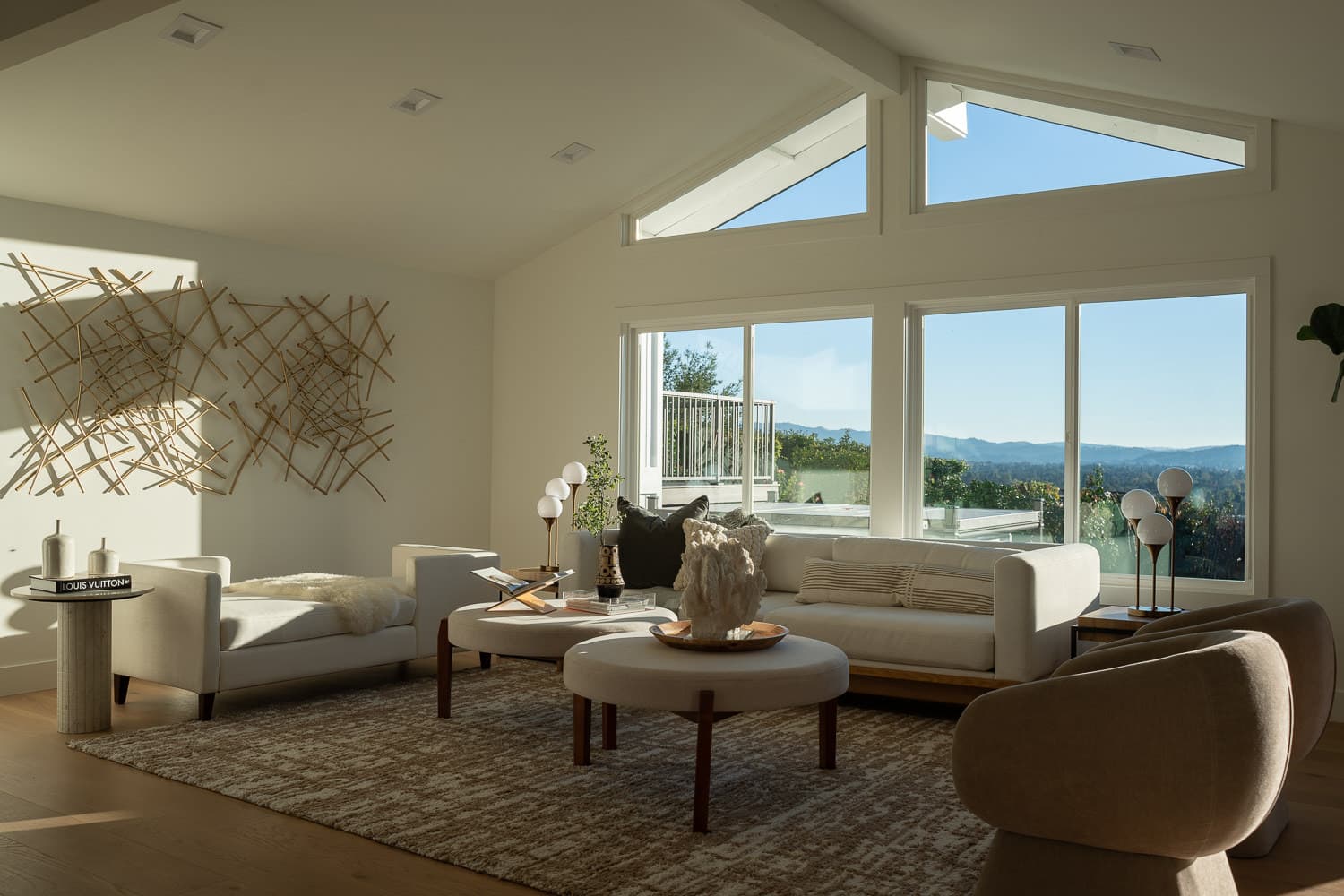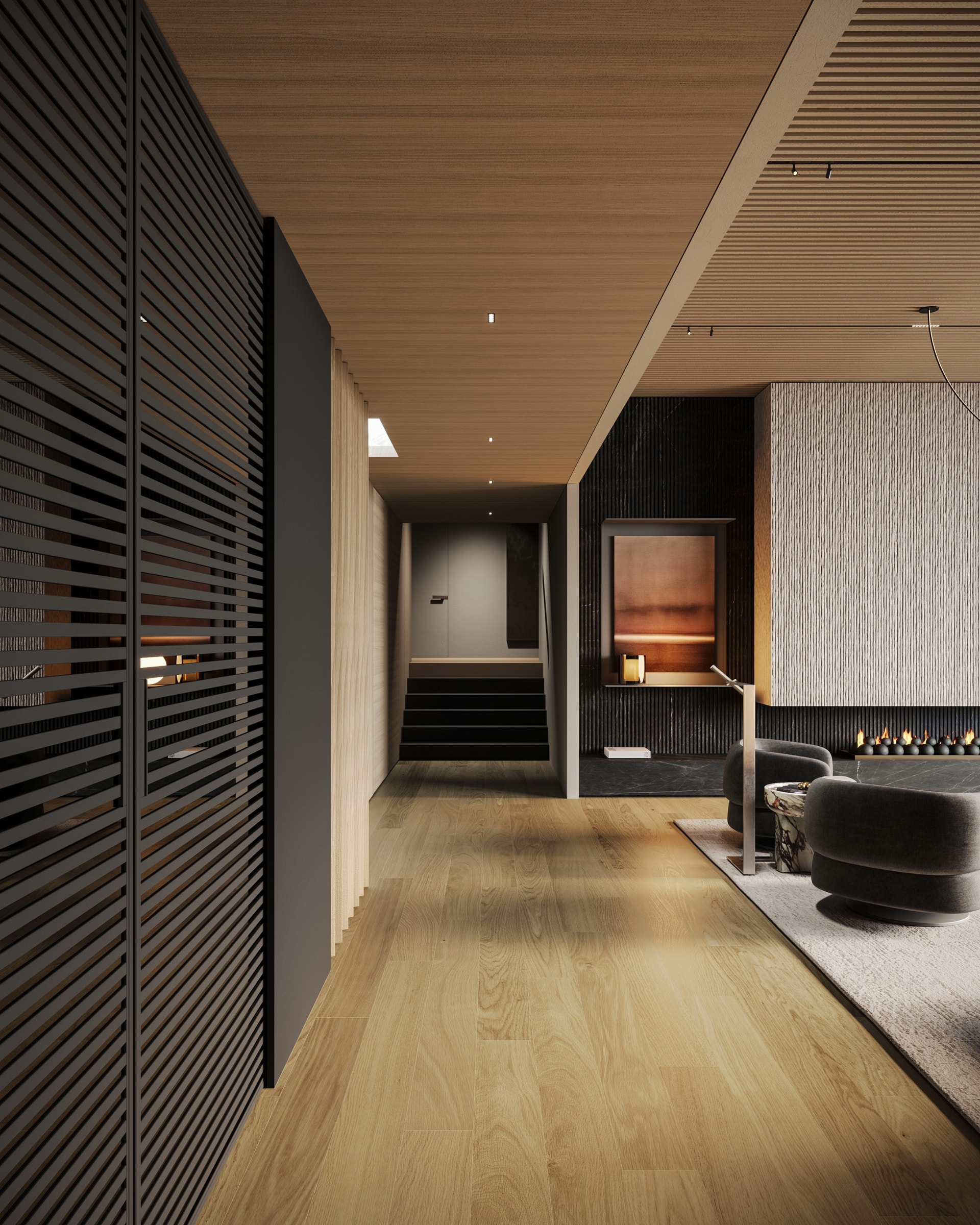
Napa interiors carry a particular weight. The homes here are not just houses, they are estates set against vineyard rows, oak-studded hillsides, and the long valley light that changes hour by hour. A great interior in Napa has to hold its own against that landscape, not compete with it. At New Key Construction, we design interiors for Wine Country the way the region actually lives: agrarian-modern, material-honest, and built to open up to the outdoors.
What a high-end Napa client wants from interior design
Most of our Napa clients are designing for a specific way of life. They entertain, they cook, they host friends and family who linger over long dinners, and they want the inside of the home to feel continuous with the terrace, the pool, and the vineyard beyond. That translates into a recurring set of interior priorities.
Open, generous kitchens and great rooms that work for both a quiet Tuesday and a forty-person harvest dinner. Honest, tactile materials: rift oak, plaster, unlacquered metals, board-formed concrete, natural stone with real movement. Interiors that read warm and lived-in rather than glossy or showy. Wine storage and tasting moments that feel native to the house, not bolted on. And above all, an indoor-outdoor flow where large glazed openings, deep overhangs, and aligned floor materials erase the line between the living room and the land.
The interior palette in Napa tends to come from the valley itself: warm neutrals, earthen tones, sage and stone, with terracotta and aged bronze as accents. We design to that register, then layer in the personality and provenance each client brings.
The Napa planning reality, and why it shapes the interior
Interior design in Napa rarely happens in a vacuum. Much of the county sits within agricultural and unincorporated land, where projects move through Napa County review rather than a single city counter, and where ag-zoning, viewshed, and watershed considerations can shape what you can build and how. Wildfire is a permanent part of the conversation. Homes in higher-risk zones carry wildland-urban interface expectations that influence exterior assemblies, openings, and the materials at the boundary between inside and out.
For interiors, this matters more than people expect. The indoor-outdoor opening you want in the great room interacts with fire-resilient glazing and detailing. The flooring that runs from the kitchen out to the terrace has to be specified with both interfaces in mind. Built-ins, paneling, and ceiling treatments often coordinate with structural and mechanical work that itself needs permits. When the interior is designed in isolation from those realities, you get redesigns, delays, and surprise costs. We design the interior and the conditions around it together, so the finished rooms are deliverable, not just beautiful on paper.
The design-build difference
We are a design-build firm, and for Napa interiors that is the core advantage. One team handles design and build under a single agreement. The people drawing your kitchen are accountable to the people installing it, so the millwork detail you approve is the millwork detail that gets built.
We price options up front. Before you commit, you see real, itemized numbers against the choices that matter: the stone, the cabinetry approach, the lighting plan, the finish level. You make decisions with cost in front of you instead of discovering the budget after the design is locked.
And we produce 3D renderings before permits. You walk through your interior in three dimensions, see how the valley light lands on the materials, and adjust while changes are still inexpensive. That same model coordinates with the construction and permitting work, so what you approve visually is what moves toward the county and what gets built.
How we work on a Napa interior
We start by understanding the home, the site, and how you intend to live in it. From there we develop a design direction, material palette, and spatial plan tuned to Wine Country living. We render the interior so you can experience it before anything is committed, attach priced options to the meaningful choices, then carry the approved design through construction with our own team. Because design and build sit under one roof, scheduling, procurement, and the trades stay coordinated from first sketch to final walkthrough.
The result is an interior that belongs to its place: rooms that feel like Napa, detailed to last, and built without the handoffs and finger-pointing that derail so many high-end projects.
FAQ
Do you only design interiors, or do you build them too?
We are a design-build firm, so we do both under one agreement. The same team that designs your interior also builds it, which keeps the design intent intact from drawing to installation and removes the gaps that appear when a designer and a separate contractor never share accountability.
Can I see my interior before construction starts?
Yes. We produce 3D renderings before permits, so you can walk through the space, evaluate materials and light, and refine the design while changes are still easy and inexpensive. The same model coordinates with the construction and permitting work that follows.
How does Napa County permitting affect an interior project?
Many Napa homes sit on agricultural or unincorporated land reviewed by the county, and wildfire and ag-zoning considerations can shape exterior assemblies and openings that connect to interior spaces. Because we design and build together, we plan the interior around those realities up front rather than reworking it later.
What style of interior design do you do in Napa?
Our work leans agrarian-modern: warm, material-honest interiors that feel native to Wine Country and open up to the landscape. We use natural stone, rift oak, plaster, and aged metals, then tailor the palette and details to each client and home.
How do you handle budget on a high-end interior?
We price options up front. Before you commit, you see itemized costs tied to the choices that drive the budget, such as stone, cabinetry, and lighting. That way you make design decisions with real numbers in front of you instead of finding out the cost after the fact.