Custom home builds in Napa, built for Wine Country living
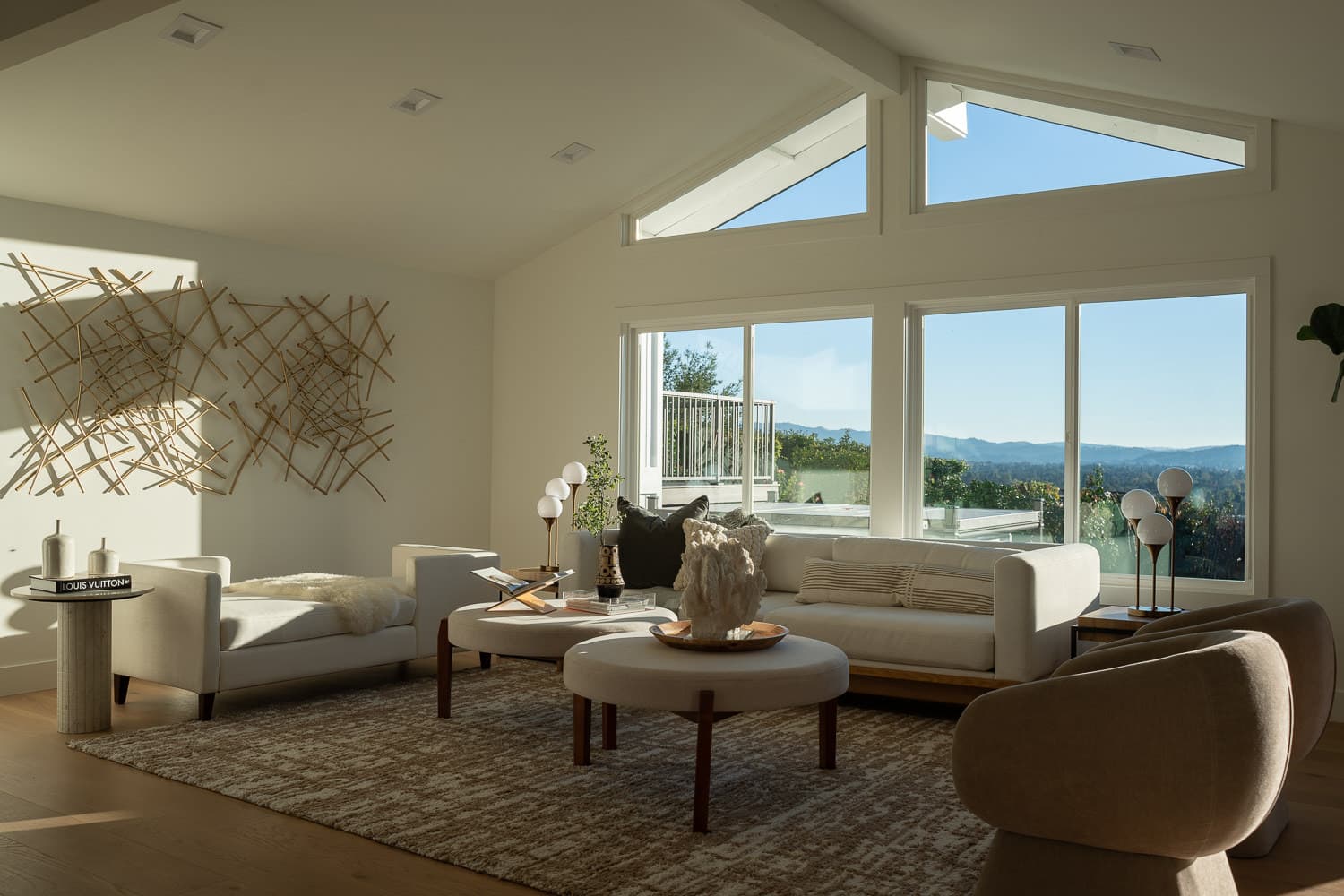
Napa homes answer to the land first. On a vineyard parcel or a hillside above the valley floor, the house is shaped by long views, low afternoon light, oak canopy, and the simple fact that most of the year you want to live as much outside as in. The local vocabulary leans agrarian-modern: board-and-batten and standing-seam metal that nod to the old barns and wineries, deep covered porches and overhangs that cut the summer heat, big steel-and-glass openings that fold the patio into the great room, and natural materials like stone, plaster, and reclaimed timber that age into the setting instead of fighting it.
The clients who build here tend to know exactly what they value: quiet, light, privacy, and a connection to the surrounding agriculture, whether that is a working block of vines, an orchard, or just a meadow that frames the hills. A high-end Napa home is rarely about square footage for its own sake. It is about a few rooms that are genuinely beautiful, a kitchen and a covered loggia built for entertaining, a primary suite that opens to the view, and a relationship between indoor and outdoor space that feels effortless. We design and build New Key Construction homes to that brief: restrained, durable, and specific to the parcel.
The Napa lot and permitting reality
Building in Napa is as much a land-use exercise as a construction one, and being honest about that up front saves clients real time and money. Much of the county outside the incorporated cities sits in agricultural and agricultural-watershed zoning, where what you can build, how big, and how close to vineyards or property lines is genuinely constrained, and where new development on a parcel can trigger county-level review beyond a simple over-the-counter permit.
Several constraints tend to show up on Napa parcels, and which ones apply depends entirely on your specific site:
- Slope and grading. Hillside lots bring grading limits, retaining walls, driveway-grade requirements, and erosion and drainage controls. Steeper ground means more engineering and more review.
- Wildfire. Much of the county is mapped in higher fire-hazard zones, which drives defensible-space requirements, ignition-resistant exterior assemblies and materials, ember-resistant venting, and water supply and access standards for emergency vehicles.
- Trees, setbacks, and water. Oak and other tree protections, vineyard and stream setbacks, septic and well siting, and limits on building envelope and impervious surface all shape where a house can actually sit.
- Historic and design review. In and around the city of Napa and the smaller towns, projects in historic or design-review districts get an added layer of architectural scrutiny.
We do not promise to skip any of this, and we never guess at codes. What we do is read the parcel early, map the constraints that genuinely apply to your site, and design within them from day one so the plan that reaches the county is the plan that gets built. That avoids the expensive Napa pattern of designing a dream that the zoning, the slope, or the fire requirements were never going to allow.
Why design-build is the right model in Napa
Here is the line that matters. With design-build, you get one team for design and build, priced options up front, and 3D renderings before you commit to permits. That single accountable team is especially valuable on a Napa parcel, where the constraints above mean design decisions and cost are tied together at every step.
In the traditional path, an architect designs in one room and contractors bid later, and the budget surprise arrives after you are emotionally committed to the drawings. We collapse that. As we design, we price. You see real options with real numbers, so the choice between a steel-window wall and a more modest opening, or between a full lower level and a smaller footprint, is made with the cost in front of you rather than discovered at bid time. And because the same team carries the project from first sketch to final walkthrough, the renderings you approve, the permit set the county reviews, and the house our crews build are one continuous chain, not a series of handoffs where intent gets lost.
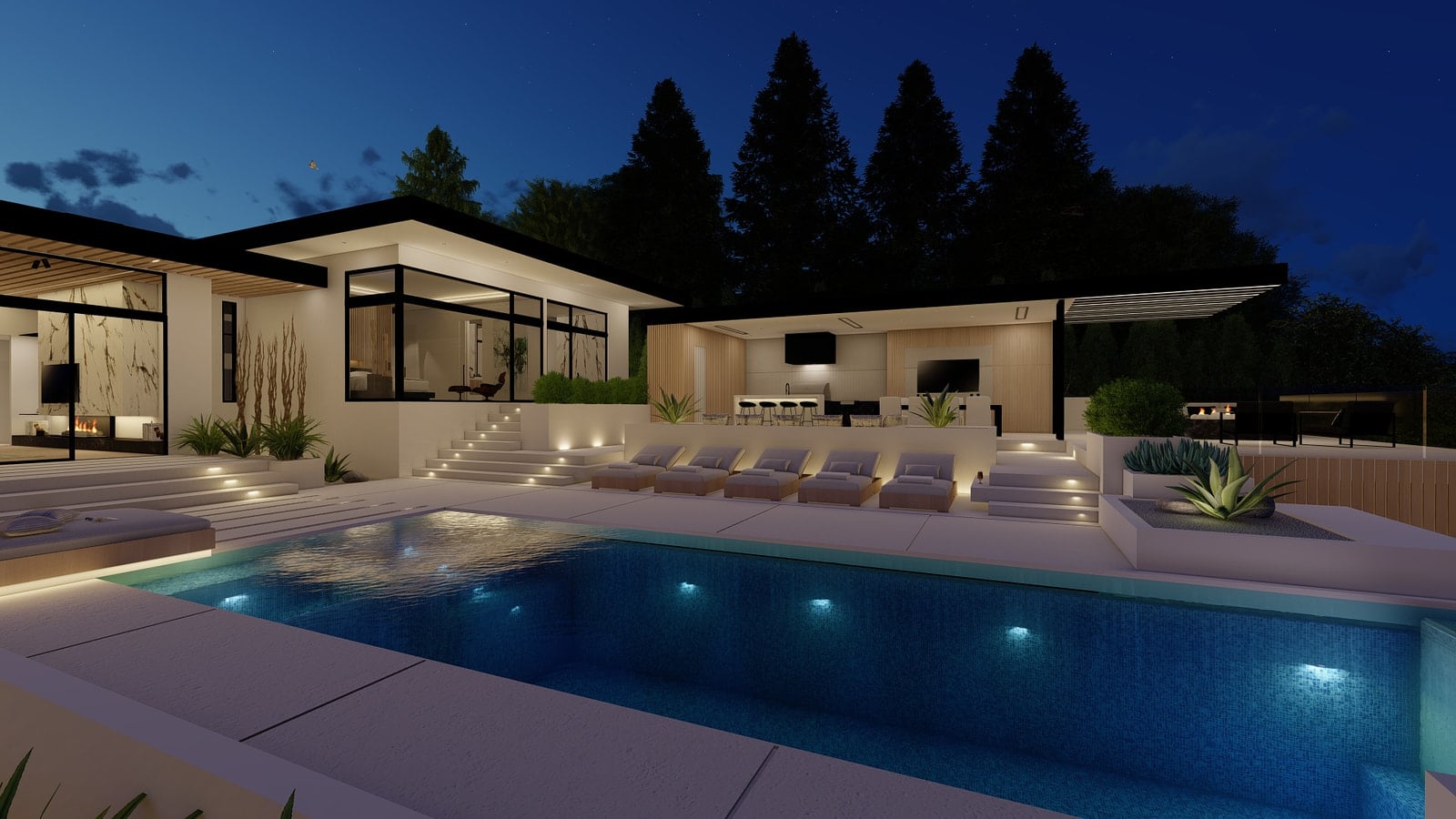
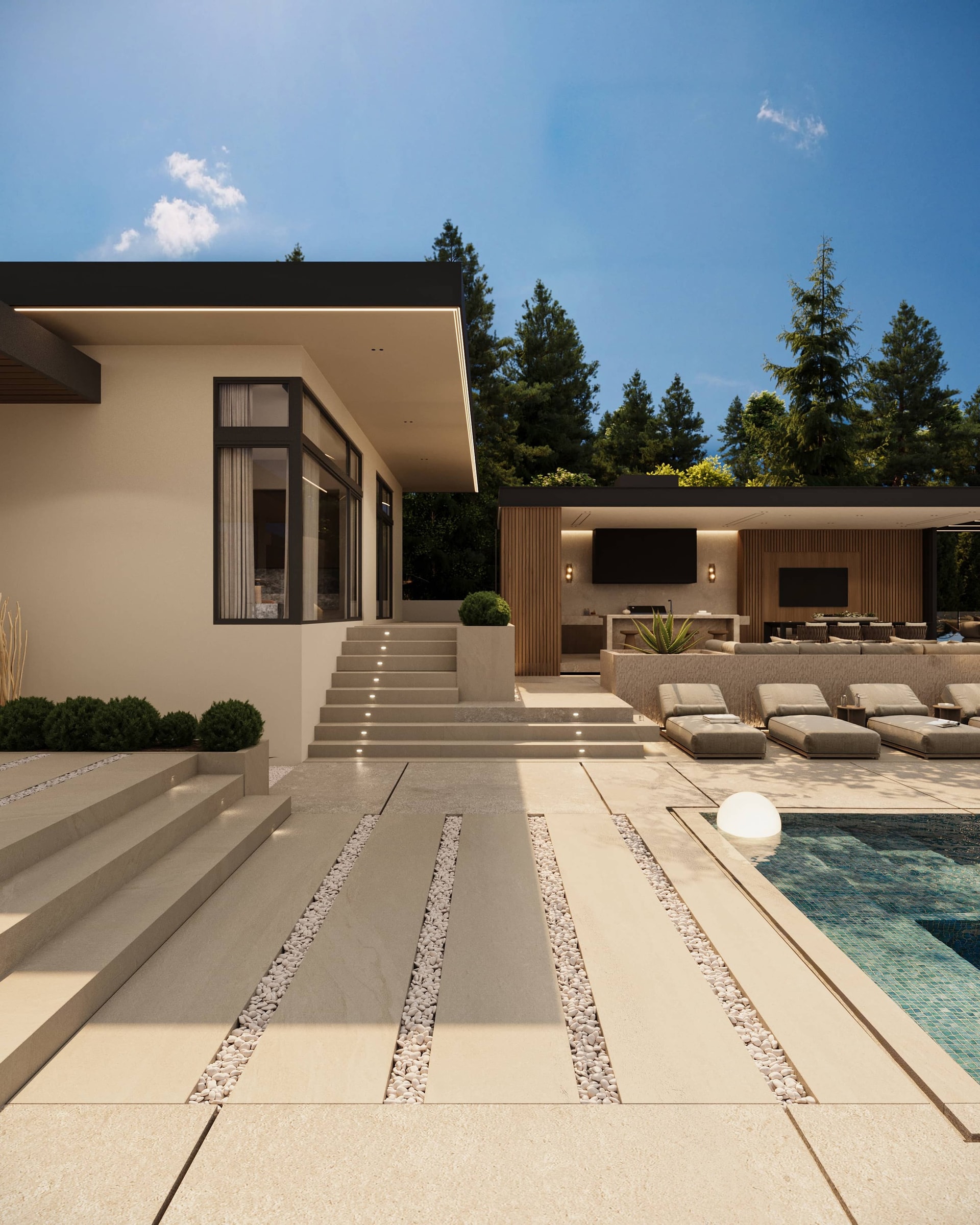
The 3D renderings do real work here too. Before you spend on a full permit submittal, you see the home on its actual site, sited to the views and the light, so you can judge massing, materials, and how the indoor-outdoor living truly reads on your land. It is far cheaper to move a wall in a model than after the slab is poured.
How we work
We start by understanding the parcel and what you want from the home, then produce a design with priced options and renderings you can react to. Once the direction is set, we carry it through the county process and into construction with the same team. You are not managing the seams between an architect, an estimator, and a builder. That is the whole point of the model, and on a constrained Wine Country lot it is what keeps a project on its feet.
If you are weighing a custom home or a vineyard estate in Napa and want a clear, honest read on what your parcel will allow and what it will cost, we would welcome the conversation.
FAQ
Do you handle the county permitting and review process?
Yes. We design within the constraints that apply to your specific parcel and carry the project through the county or city process. We will not quote you ordinance numbers or fees we cannot stand behind, but we will give you a straight assessment of which reviews and requirements your site is likely to trigger.
What does design-build actually change for me?
One contract and one accountable team for both design and construction. You get priced options as the design develops and 3D renderings before you commit to permits, so cost and design decisions happen together instead of the budget arriving as a surprise after bidding.
Can you build on a hillside or vineyard parcel?
Those are common in Napa and they come with real constraints around grading, drainage, fire hazard, tree protection, and agricultural setbacks. We read those early and design to them, rather than drawing a plan the site was never going to permit.
How do you address wildfire requirements?
Much of the county falls in higher fire-hazard zones, which can call for defensible space, ignition-resistant exterior materials and assemblies, ember-resistant detailing, and access and water-supply standards. We build these into the design from the start rather than retrofitting them late.
Will I see the home before construction starts?
Yes. We produce 3D renderings of the home on its actual site so you can judge massing, materials, light, and indoor-outdoor flow before committing to a full permit set. Changing a model is far cheaper than changing a finished build.