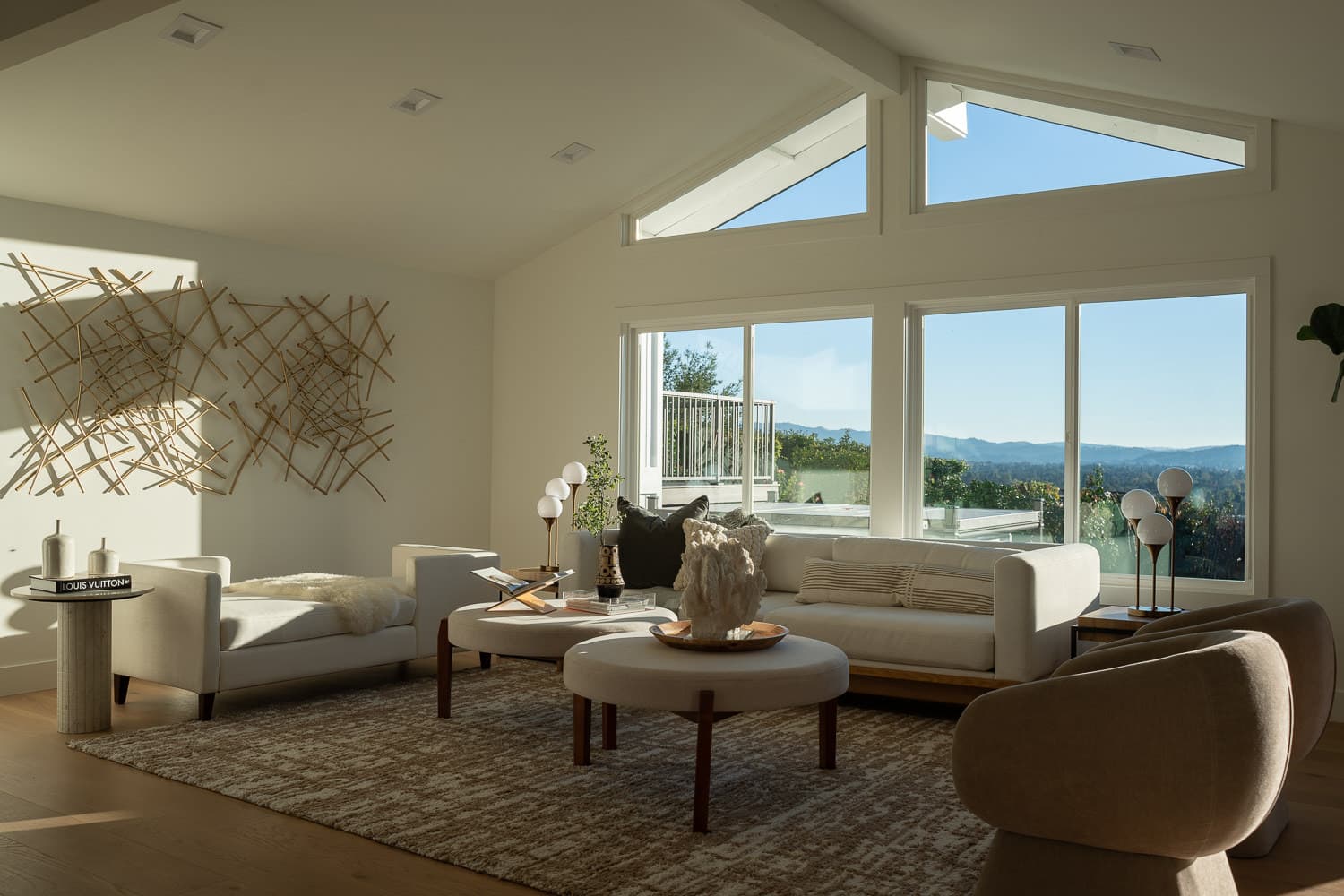
St. Francis Wood is one of San Francisco's planned garden suburbs, laid out in the early twentieth century as a residence park with curving streets, mature street trees, and generous setbacks. The homes here are larger than the city norm, set on wide lots that are rare inside San Francisco, and they lean heavily on period-revival architecture: Mediterranean and Spanish-style stucco with tile roofs, Tudor with steep gables and leaded glass, and Colonial Revival. That architectural pedigree is the whole point of interior design in this neighborhood. The work is not about imposing a trend on a house. It is about reading what the original architect intended and bringing the interior up to the way people actually live now.
What a St. Francis Wood interior project usually involves
Most owners here are not asking for a gut renovation of a fragile cottage. They have a substantial period home and a list that builds over years: a kitchen that was remodeled poorly in the 1980s, formal rooms that feel dark and closed off, primary suites that need real closets and a proper bath, and millwork that has been painted over so many times the original profiles are buried. The shared thread is that the bones are good and the finishes have fallen behind.
A high-end client in St. Francis Wood typically wants three things at once. First, interiors that respect the architecture: plaster, arched openings, coved ceilings, original casing, and tile that reads as part of the house rather than a flip. Second, modern performance, meaning kitchens that work for how families cook today, bathrooms with real ventilation and drainage, lighting layered properly instead of a single ceiling fixture, and climate and electrical systems that match the square footage. Third, a process that does not turn into a two-year mystery. These are primary residences, and the disruption of construction is the part people dread most.
How design-build changes the work
New Key Construction is a design-build firm, which means design and construction live under one roof. For an interior project that difference is practical, not philosophical.
You work with one team from the first measurement through the final walkthrough. The people drawing your kitchen are the same organization that prices it and builds it, so a detail does not get designed in isolation and then bid out to a contractor who has never seen it. We put priced options in front of you up front, so when you are choosing between, say, a marble or quartzite counter, a stock cabinet line or custom millwork, you are looking at the cost difference before the decision is made, not discovering it during construction. And we produce 3D renderings before permits, so you can see the room, the sightlines, the cabinet runs, and the material palette while everything is still changeable on a screen rather than on a job site. For period homes where a wrong move is expensive to undo, seeing it first is the single most useful thing we do.
That single-team structure also matters for sequencing. When the same firm holds the design and the build, the schedule, the order of trades, and the protection of the rest of your house are planned as one thing instead of handed off.
The planning and permit reality here
Interior design and remodeling in St. Francis Wood sits inside two overlapping realities. The first is the neighborhood itself. St. Francis Wood was developed with deed restrictions and design standards intended to protect the character of the residence park, and there is a longstanding homeowners association presence tied to that history. Anything that touches the exterior, the front elevation, or visible massing tends to draw scrutiny that a purely interior change does not.
The second is San Francisco's permitting system. Cosmetic interior work like paint, finishes, and like-for-like fixture swaps is generally light on permitting, while anything structural, anything that moves walls, and anything touching electrical, plumbing, or mechanical systems goes through the San Francisco Department of Building Inspection and the relevant trade permits. Older homes routinely surface conditions behind the walls, original wiring, galvanized supply lines, or framing that was modified by a previous owner, that change scope once they are opened up. We plan for that reality rather than pretend it away, which is part of why we want the design resolved and rendered before the permit and build phase begins. The exact requirements depend on your specific scope, and we confirm the current rules with the city for your project rather than quoting numbers that change.
Working with the architecture, not against it
The best St. Francis Wood interiors feel like they were always there. That comes from matching new work to the existing vocabulary: profiles that echo the original casing, tile and stone chosen for the period rather than the showroom, paint and plaster that let the light do its job, and lighting designed so the architecture reads at night. It also comes from restraint. A garden-suburb home with good proportion does not need to be filled. It needs the right interventions in the right places, priced honestly and built once.
FAQ
Do I need a permit for interior design work in St. Francis Wood?
It depends on the scope. Purely cosmetic work such as paint, finishes, and direct fixture replacement is generally light on permitting, while moving walls or touching structural, electrical, plumbing, or mechanical systems requires permits through the San Francisco Department of Building Inspection. Because we are a design-build firm, we identify what your specific project needs and handle the permitting as part of the job rather than leaving it to you.
Will the St. Francis Wood design standards affect an interior project?
St. Francis Wood was developed with deed restrictions and design standards aimed at preserving the residence park's character, and there is a homeowners association tied to that history. Purely interior changes usually fall outside that scrutiny, but anything affecting the exterior, the front elevation, or visible massing can. We flag where your scope might touch those standards early so there are no surprises.
What does design-build mean for my interior remodel?
It means one team handles design, pricing, and construction together. You are not designing with one firm and then bidding the work to a separate contractor. We give you priced options up front so cost is part of each decision, and we produce 3D renderings before permits so you can see the result while it is still easy to change.
Why do renderings before permits matter for a period home?
Period-revival homes are expensive to get wrong because the details, plaster, arched openings, and original millwork are hard to replicate once disturbed. Seeing your kitchen or bath as a 3D rendering lets you resolve layout, sightlines, and materials on screen, before money is committed to permits and construction.
Can you match the original character of my Mediterranean or Tudor home?
Yes. The goal is interiors that read as part of the house. We work from the existing architectural vocabulary, matching millwork profiles, choosing tile and stone suited to the period, and designing lighting so the architecture holds up day and night, while still delivering the modern kitchen, bath, and systems performance you expect.