St. Francis Wood is one of San Francisco's first planned garden suburbs, laid out with curving streets, deep landscaped setbacks, and lots that run noticeably larger than the city norm. The housing stock leans heavily on period-revival architecture: Mediterranean and Spanish Colonial stucco, Tudor cottages, and stately traditional homes built to the neighborhood's original design standards. Many of these houses are now eighty to a hundred years old, which means their bathrooms were often sized and plumbed for a different era. That is exactly the gap a luxury bathroom remodel closes.
What St. Francis Wood Homeowners Want From a Bathroom Remodel
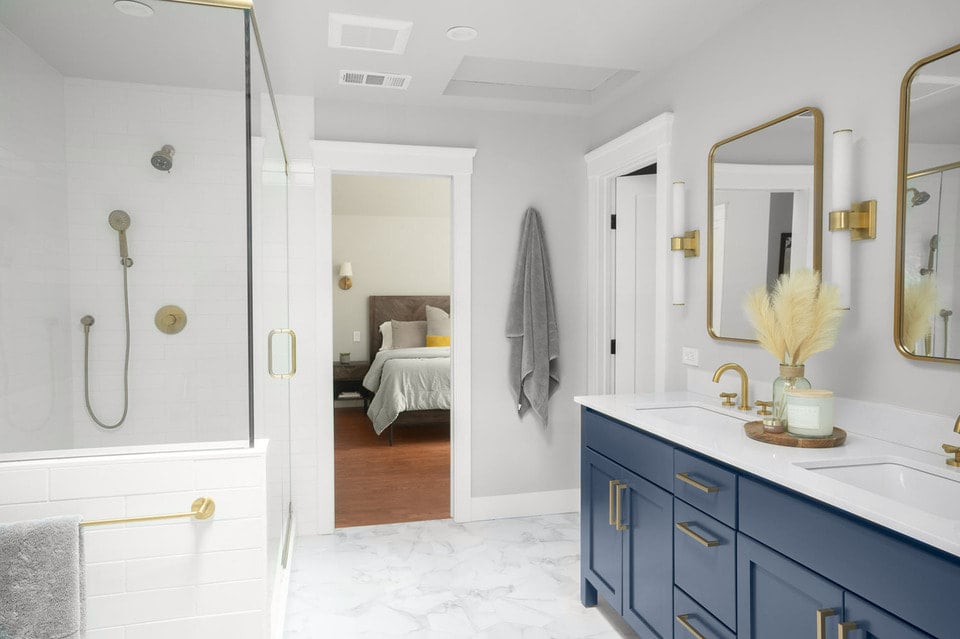
Owners here are rarely chasing a generic flip. They want a primary bathroom that reads as if it always belonged to the house: arched niches that echo a Mediterranean entry, leaded or steel-framed glass that nods to a Tudor original, honed stone instead of high-gloss builder tile. At the same time they want the comforts a 1920s floor plan never offered, including a curbless walk-in shower, a freestanding soaking tub, heated floors, a double vanity with real storage, and quiet, well-zoned ventilation. Because lots are large and many homes have generous footprints, there is frequently room to expand a cramped bath into an adjoining closet, hall, or under-used bedroom corner rather than simply reskinning the existing box.
The challenge is doing all of that without making the result look new. Period-revival homes punish shortcuts. Trim profiles, door casings, plaster texture, and tile layout all have to be considered together, or the finished bathroom feels grafted on. That coordination is the heart of a luxury remodel in this neighborhood.
The Design-Build Difference
New Key Construction is a design-build firm, which means one team handles both the design and the construction of your bathroom. You are not hiring an architect, then bidding the drawings to contractors, then refereeing between them when the budget and the design disagree. We draw it, price it, and build it under one roof.
In practice that gives you three things most St. Francis Wood homeowners tell us they wish they had earlier. First, priced options up front: when we present a design direction, it comes with real numbers attached, so you can choose between a marble slab and a porcelain alternative knowing what each does to the total before anything is ordered. Second, 3D renderings before permits, so you see the actual room, the tile coursing, the vanity proportions, and the way light falls through the window, while changes are still free to make on screen. Third, a single point of accountability for the whole project, from demolition through the final caulk line.
Planning and Permits in St. Francis Wood
A bathroom remodel in San Francisco that stays within the existing footprint and reconfigures fixtures, plumbing, electrical, and finishes is generally a permitted interior project handled through the city's building permit process. That is true across the city, and St. Francis Wood is no exception. Where this neighborhood differs is the layer of design expectation that comes with it.
St. Francis Wood was developed with private design standards administered through its homeowners association, and the neighborhood has long-standing architectural review traditions tied to its garden-suburb character. Interior bathroom work usually lives below the threshold that draws exterior design scrutiny, since it does not change the street-facing facade. But the moment a project touches anything visible from outside, such as a new or enlarged window for that walk-in shower, a relocated vent, a skylight, or any change to roofline or exterior wall, both the city and the neighborhood's review framework become relevant. We flag those triggers early, because finding them after demolition is the expensive way to learn them.
We do not invent timelines or quote permit fees we cannot stand behind. What we do is map your specific scope against what actually requires a permit and what, if anything, touches the exterior, then build that reality into the schedule before you commit. For homeowners on the larger lots here who are considering a small footprint expansion, that early read is especially worth having.
How a Project Runs
A typical luxury bathroom remodel with us follows a clear arc. We start with discovery and measured site documentation, often including a 3D scan of the existing space, which matters in older homes where walls are rarely square. From there we develop the design, present it with photorealistic renderings and priced options, and lock selections before any permit is filed or any tile is ordered. Construction follows the approved set, with the same team that designed the room standing behind the build.
Because the design is resolved and costed before we open a wall, there are fewer of the mid-project surprises that turn remodels into open-ended commitments. You know what the room will look like, what it will cost, and roughly how long it will take, before the disruption starts.
Why St. Francis Wood Homeowners Choose Us
This is a neighborhood of considered homes, and a luxury bathroom should match that standard rather than fight it. Our work centers on getting the design right for the architecture first, then building it cleanly. For owners of Mediterranean, Tudor, and period-revival homes who want one accountable team, transparent pricing, and a finished bathroom that looks original, the design-build model removes most of the friction that makes remodeling stressful.
FAQ
Do I need a permit for a luxury bathroom remodel in St. Francis Wood?
Most full bathroom remodels involve changes to plumbing, electrical, and sometimes layout, which generally require a San Francisco building permit even when the work is entirely interior. If your project also alters anything visible from the exterior, such as a new window or skylight, the neighborhood's design review framework can come into play as well. We review your specific scope and tell you which permits and reviews actually apply before you commit to a plan.
Can you expand a small bathroom into adjacent space?
Often yes. Many St. Francis Wood homes sit on larger lots with generous floor plans, which sometimes leaves room to borrow space from a closet, hallway, or adjoining room to create a true primary suite bathroom. We evaluate this during design and show you the options as 3D renderings with pricing, so you can weigh an expansion against a same-footprint remodel before deciding.
What makes design-build different from hiring an architect and a contractor separately?
In a design-build model, one team handles both design and construction, so the people drawing your bathroom are the same people accountable for building it. That removes the gap where a separate architect's design meets a separate contractor's budget and the homeowner ends up mediating. You get priced options during design, 3D renderings before permits, and a single point of responsibility through the entire project.
Will the new bathroom match my period-revival home?
That is the goal. We design to the architecture of your home, whether it is Mediterranean, Spanish Colonial, or Tudor, so finishes, proportions, trim, and tile read as if they belong to the original house rather than a modern insert. The 3D renderings let you confirm that fit before any material is ordered.
How do you handle pricing so there are no surprises?
We attach real numbers to design options up front and lock selections before any permit is filed or material ordered. Because we resolve and cost the design before opening a wall, the most common sources of mid-project cost overruns are settled in advance. You approve the scope, the look, and the budget before construction begins.