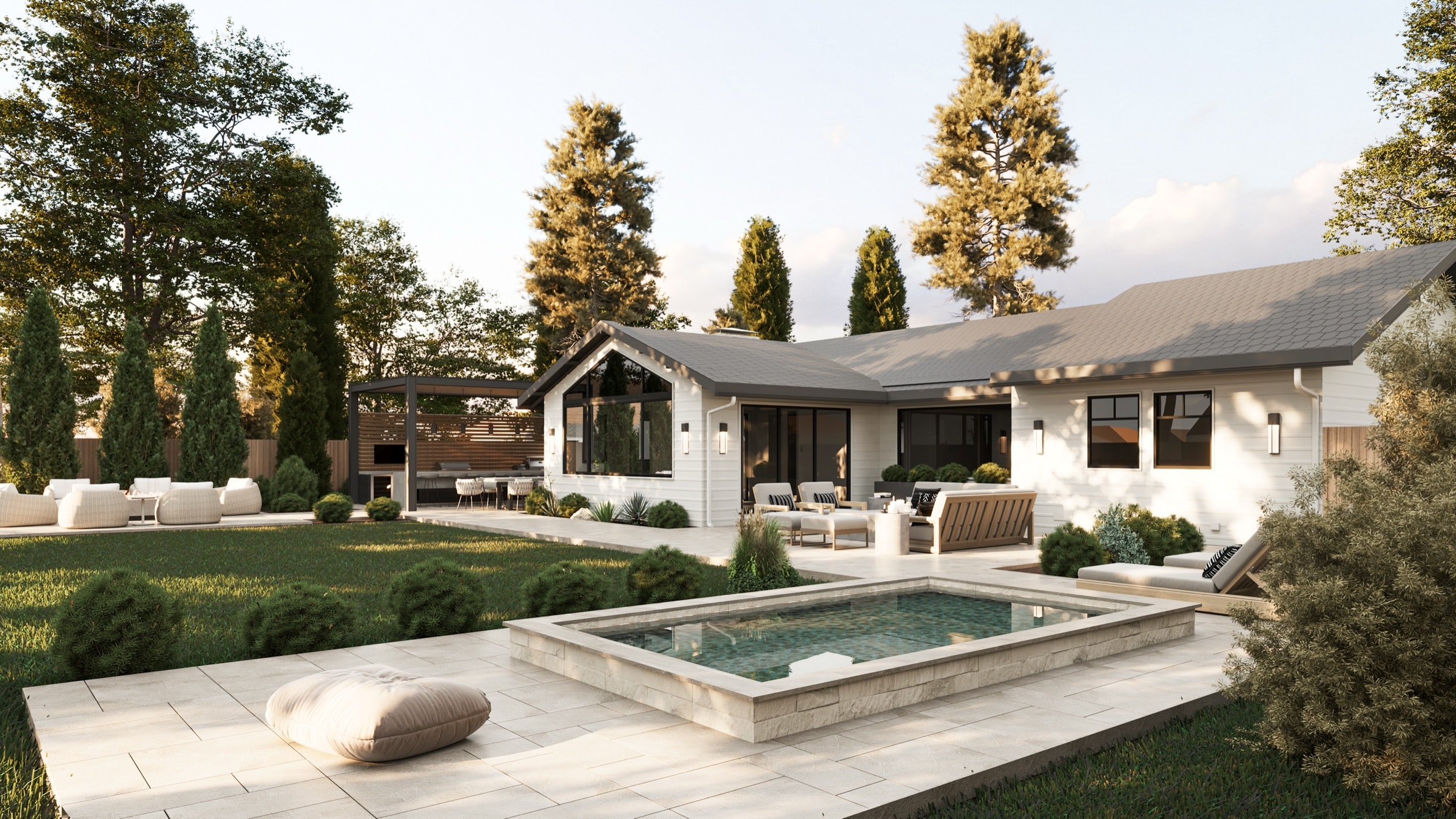
If you own a home in the Bay Area and you have been weighing an accessory dwelling unit, the rules shifted again this year, and mostly in your favor. California passed another round of ADU legislation that took effect on January 1, 2026, tightening timelines, clarifying which units skip fees, and easing owner occupancy rules. Here is a plain reading of what the 2026 law actually allows, from a licensed team that builds these units across Contra Costa County and the East Bay.
What an ADU is and the three types
An accessory dwelling unit is a second, fully independent home on a lot that already has a house, with its own kitchen, bathroom, and place to sleep. You can rent it or house family in it. California recognizes three types. A detached ADU is a freestanding structure in the yard. An attached ADU shares a wall with the main house, often an addition or a converted garage. A junior ADU, or JADU, is carved from the existing footprint, capped at 500 square feet, and may share a bathroom. For a full walk through of which type suits which lot, see our ADU Bay Area guide. Our ADU service page covers how we handle design, engineering, and permitting under one roof.
What 2026 law allows statewide
The backbone is still AB 68, which in 2020 made ADU approval ministerial, and SB 13, which set the 60 day clock and the fee exemptions. On January 1, 2026, several new measures took effect. SB 543 fixed the definition of size as interior livable space, confirmed the fee exemptions, and gave cities a firm 15 business day window to judge whether your application is complete. AB 1154 loosened owner occupancy for junior units and blocked their use as rentals of under 30 days. A companion 2025 enforcement measure gave the state Department of Housing and Community Development real teeth: if a city fails to submit its ADU ordinance to HCD within 60 days, or fix a flagged problem within 30 days, that ordinance is void by law. On most single family lots you keep the right to build at least one ADU plus one JADU.
The approval timeline and the ministerial process
Ministerial means the city cannot hold a public hearing or apply subjective taste. If your plans meet the written objective standards, staff must approve them. Under SB 13 the city has 60 days to approve or deny a complete application, and SB 543 adds that the completeness determination is due within 15 business days. Miss either deadline and your ADU is deemed approved by operation of law. Build from a preapproved plan under AB 1332 and a detached unit can clear in as little as 30 days. In the coastal zone, AB 462 now forces a 60 day decision on the coastal permit too.
Size, setback, and height limits
A detached ADU can run up to 1,200 square feet. An attached ADU can reach 50 percent of the primary home or 800 square feet, whichever is larger, and the state guarantees at least 800 square feet regardless of local zoning. A JADU is held to 500 square feet. Setbacks are capped at 4 feet from the side and rear property lines. Height starts at 16 feet for a single story unit and rises to 18 feet within a half mile walking distance of a major transit stop or high quality transit corridor. No replacement parking is required within half a mile of transit, when you convert existing space, or in a historic district.
Owner occupancy and the AB 1033 change
For a standard ADU you do not have to live on the property. AB 976 made that permanent, so you can build, move out, and rent both homes. For a JADU, after AB 1154, owner occupancy applies only when the junior unit shares a bathroom with the main house. The headline change is AB 1033, which lets a city opt in to allow you to sell your ADU separately, as a condominium, by recording a condominium plan and forming a homeowners association. As of 2026 only a handful of jurisdictions have opted in, led by San Jose, Santa Monica, and unincorporated San Diego County. The first separate sale in state history closed in San Jose in the summer of 2026, a 749 square foot unit. Most Bay Area cities, including the Contra Costa communities we build in, have not opted in yet.
Fees and the under 750 square foot exemption
An ADU of 750 square feet or less is exempt from development impact fees statewide, and SB 543 confirmed that a unit of 500 square feet or less also skips school impact fees. JADUs, capped at 500 square feet, avoid both. Above 750 square feet a city may charge impact fees, but only in proportion to the size of your primary dwelling, never as a flat penalty. Those exemptions can meaningfully change a project budget, which is why our ADU cost in the Bay Area guide walks through where the money actually goes, and our Recommended Budget tool turns those rules into a real number for your own lot.
How Bay Area cities differ
State law sets the floor, but each city layers its own objective standards on top. Cities in the hills apply extra rules in very high fire hazard zones, which shapes both the ADUs in Danville and the ADUs in Lafayette that we design, from fire rated materials to defensible space. Flatter, denser cities move faster and lean on preapproved plan libraries; our ADU work in Walnut Creek often runs through the city's streamlined path. Utility charges and stormwater rules vary by jurisdiction, though none of it overrides the state minimums.
FAQ
Can I sell my ADU separately in California?
Only in a city that has opted in to AB 1033. The 2023 law lets local governments allow an ADU to be sold on its own as a condominium, but it does not force them to, and most have not. As of 2026 the short list of jurisdictions that have opted in includes San Jose, Santa Monica, and unincorporated San Diego County. The very first separate sale in state history closed in San Jose in the summer of 2026, a 749 square foot unit. To sell separately you would record a condominium plan and form a homeowners association to govern the shared lot and utilities, which adds legal and mapping steps to the project. In the Contra Costa cities we serve, separate sale is not yet available today, so plan on holding both homes on one deed for now.
How long does ADU approval take in 2026?
The statutory ceiling is 60 days from the moment your application is complete, set by SB 13 and reinforced in 2026. On top of that, SB 543 gives the city only 15 business days to tell you whether your submittal is complete, so a city can no longer stall by sitting on paperwork. If either deadline passes without action, your ADU is deemed approved by law. When you build from a preapproved plan under AB 1332, a detached unit can clear in as little as 30 days, because the design is already vetted. Real timelines still depend on how fast you answer correction notices and whether your plans are clean on the first pass. In practice, a well prepared application in a Bay Area city moves in weeks, not months.
Do I need to live on the property to build an ADU?
For a standard ADU, no. AB 976 permanently barred California cities from imposing an owner occupancy requirement, so you can build the unit, move out of the main house, and rent both homes if you choose. Junior ADUs are the one exception, and even that rule loosened in 2026. Under AB 1154, a JADU triggers an owner occupancy requirement only when it shares a bathroom with the main house. If you design the junior unit with its own private bath, the city cannot make you live on site. One caution: junior units can no longer be rented for stays of under 30 days, so plan for long term tenants rather than nightly bookings. For most homeowners this means an ADU is a genuine income property, not a live in obligation.
What is the maximum ADU size in California?
A detached ADU can be built up to 1,200 square feet of interior livable space, which is the statewide cap most cities use. An attached ADU is allowed up to 50 percent of the size of your primary home, or 800 square feet, whichever figure is larger. Crucially, the state guarantees you at least 800 square feet no matter how restrictive your local zoning is, so a city cannot zone an ADU down to a closet. Junior ADUs are the smallest category, capped at 500 square feet because they are carved from the existing footprint of the house. Size also has a fee consequence: staying at or below 750 square feet keeps you clear of development impact fees. Many homeowners deliberately design to that line to hold down cost, then lean on layout efficiency to get the function they need.
Are ADUs under 750 square feet exempt from fees?
Yes. Statewide, an ADU of 750 square feet or less is exempt from development impact fees, the charges cities levy for parks and roads. SB 543 went further in 2026 and confirmed that a unit of 500 square feet or less also skips school impact fees, and junior ADUs, capped at 500 square feet, avoid both. If you build larger than 750 square feet, the city may charge impact fees, but only in proportion to the size of your main house, never as a flat charge. This exemption is one of the most valuable features of California ADU law, since the impact fees on a full sized home are a heavy charge that a qualifying ADU skips entirely. You still pay ordinary building permit and plan check fees, along with utility connection costs, which vary by city. To see what your unit would cost with these exemptions applied, our Recommended Budget tool builds a personalized number for your lot.
Can my city reject my ADU application?
A city can only deny an ADU for failing to meet clear, written objective standards, not for subjective reasons like neighborhood character or a neighbor's objection. Because AB 68 made approval ministerial, there is no public hearing and no discretionary vote. If your plans satisfy the published rules on size, setback, height, and fire safety, staff must approve them. If the city misses the 60 day decision deadline or the 15 business day completeness deadline, your project is deemed approved automatically. The most common real reasons for a denial or delay are correctable: an incomplete submittal, a setback drawn wrong, or a fire zone requirement missed on a hillside lot. That is why a clean first submission matters so much. When a city does overreach, the 2026 enforcement rules let the state invalidate an ordinance that violates ADU law.