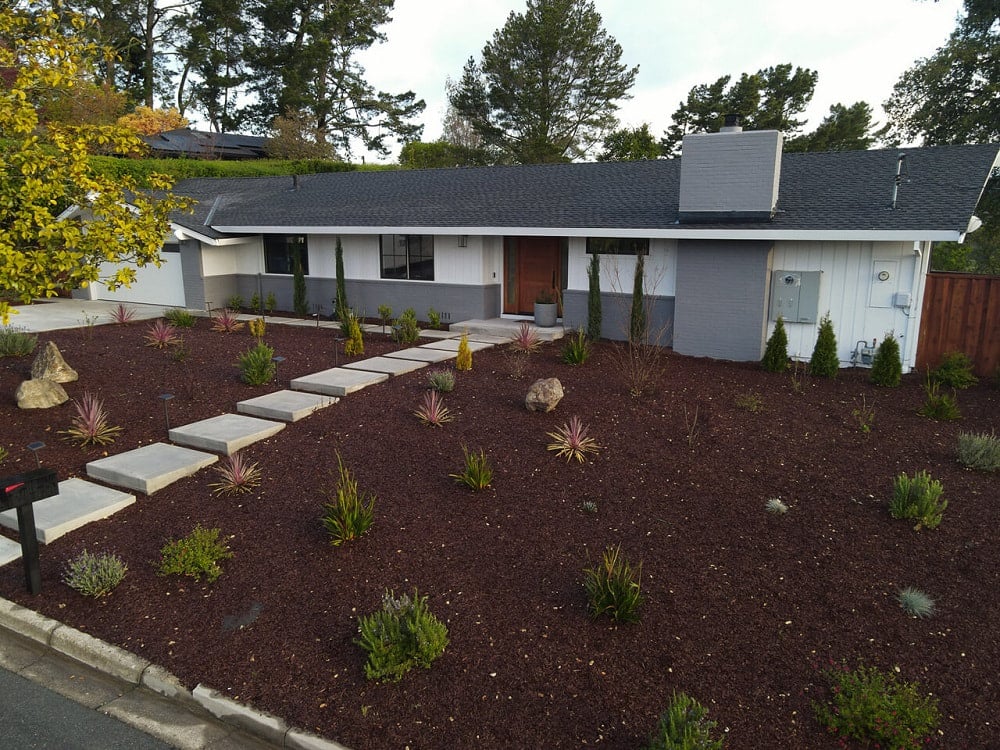
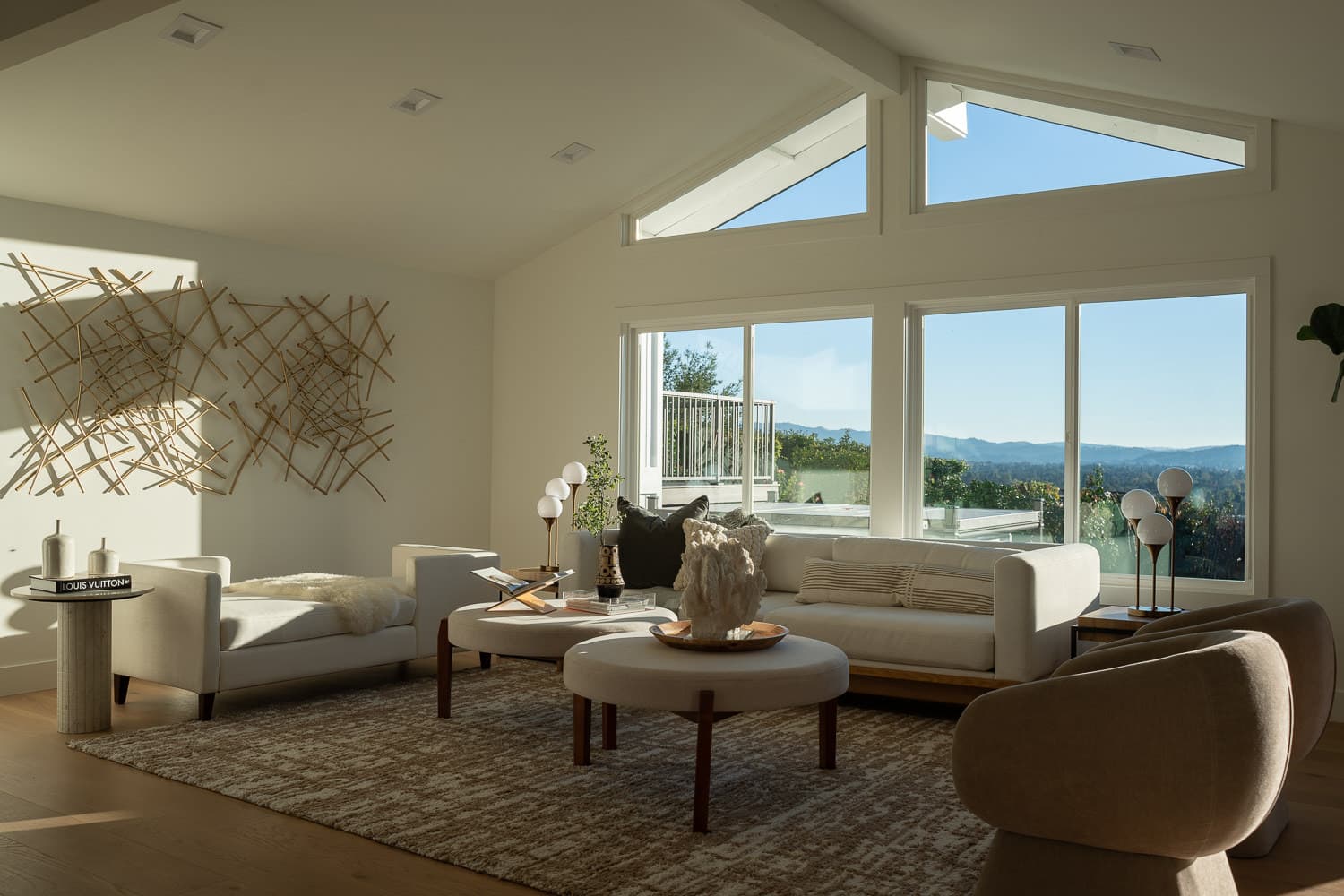
Russian Hill is one of San Francisco's most coveted and most challenging places to build anything outdoors. The homes here range from Italianate and Edwardian flats to mid-century towers and modern remodels stacked up a famously steep grade. What most of these properties share is not square footage but elevation, view, and constraint. A back garden might be a series of terraces falling away from the house. A roof might be the only flat, sun-exposed surface on the lot. Outdoor living in this neighborhood is less about sprawling lawns and more about carving usable, beautiful space out of slope, fog, wind, and a property line that sits inches from the neighbor's.
What a Russian Hill Client Actually Wants
The clients we meet on Russian Hill are not asking for a generic patio. They want to capture the bay, bridge, or skyline view their hillside position earns them. They want a roof deck or top-terrace that turns afternoon sun into an actual room. They want a sheltered courtyard or rear garden that works in the marine layer, with planting that survives wind and salt air rather than fighting it. And they want it all to feel like an extension of a high-end interior, not a separate, lesser outdoor afterthought.
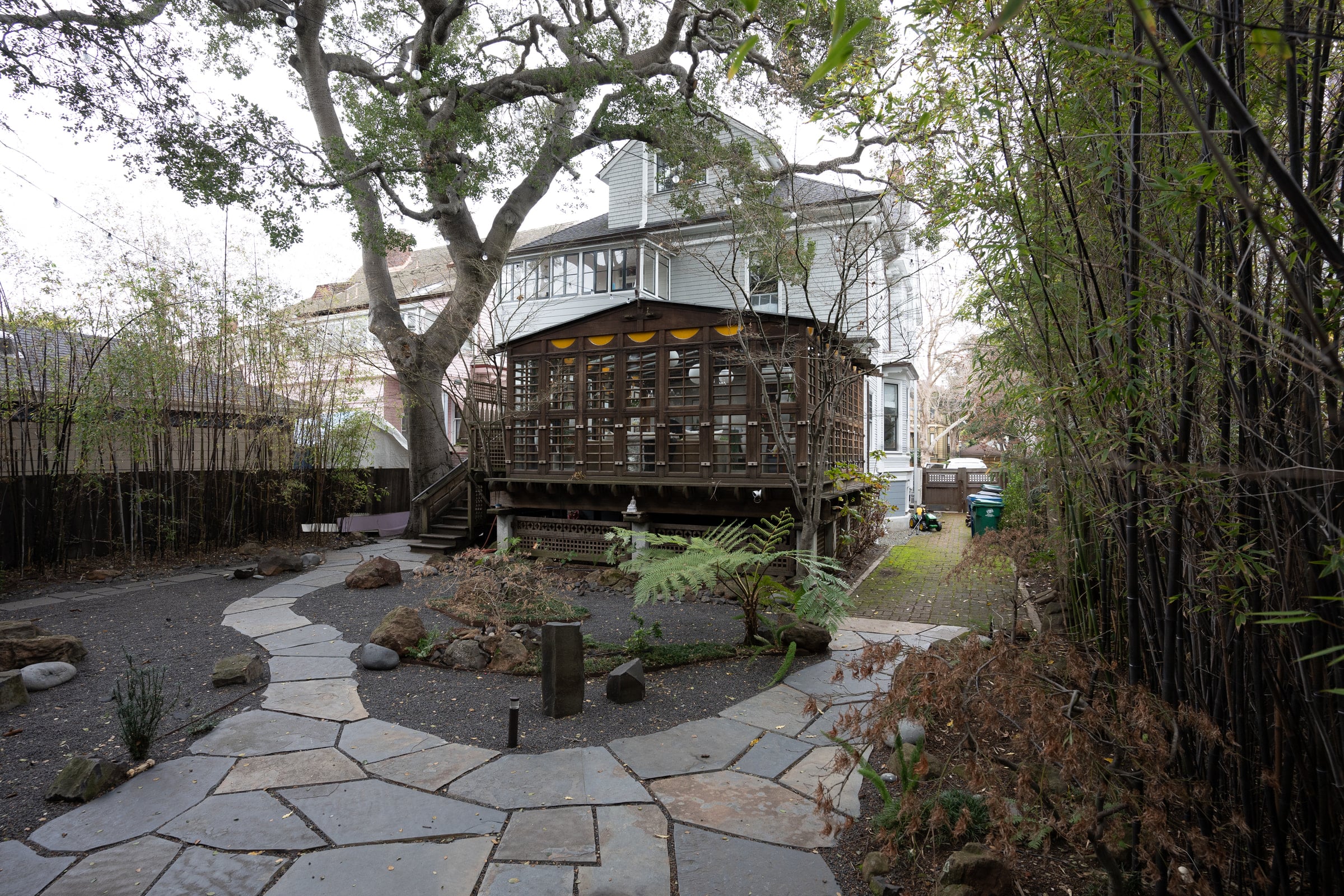
In practice that means we design for microclimate first. North and west exposures here get fog and wind; south-facing terraces and rooftops bake. We specify drought-tolerant and coastal-hardy planting, wind-aware railings and screens, durable stone and decking that handles damp, integrated lighting for the long blue hours, and built-in seating, fire, and heat so the space is usable past sunset. On the tightest lots, vertical greening, planters, and trellises do the work a yard normally would.
The Local Planning and Permit Reality
This is where Russian Hill projects either go smoothly or stall. The neighborhood's narrow streets and steep grades make material delivery and equipment access genuinely difficult, and that has to be solved on paper before it becomes a job-site crisis. Roof decks, exterior stairs, decks over a certain height, and structural changes to retaining walls typically require permits from San Francisco's planning and building departments, and view and light considerations frequently invite neighbor and Planning input. Properties in or near historic districts carry additional design review. Hillside work also raises real questions about drainage, grading, and slope stability that the city and any responsible builder take seriously.
We do not guess at this and we will not quote you ordinance numbers we cannot verify. What we do is map the permitting path for your specific property up front, flag where neighbor notification or historic review is likely, and design within those realities instead of discovering them mid-build. On a hillside lot, the difference between a project that's permittable and one that isn't is often decided in the first design conversation.
The Design-Build Difference
Most outdoor projects in San Francisco involve a designer, a separate contractor, and a structural engineer who never sit in the same room. Drawings get handed off, scope gets lost, and the homeowner becomes the messenger between people who disagree. We work differently, and on a constrained Russian Hill lot that difference is the whole point.
New Key Construction is a design-build firm. One team handles both the design and the build, so the people drawing your terrace are the same people who know what it costs to get materials up your street and how your retaining wall actually has to be detailed. You get priced options up front, so you are choosing between real, costed scopes rather than approving an open-ended estimate that balloons later. And we produce 3D renderings before permits, so you see your roof deck, your garden terraces, your outdoor kitchen, and the view they frame before a single permit is filed or a board is cut. That render is also the tool that makes neighbor conversations and design review faster, because everyone is reacting to the same clear picture.
How a Project Comes Together
We start at your home, on the slope, in the actual light and wind your site gets. We talk through how you want to live outside, then translate that into a measured plan and a set of priced options. Once you choose a direction, we render it in 3D so the design is unambiguous. From there we manage the permitting path, coordinate the structural and drainage details that hillside work demands, and build it with our own team. Because design and construction live under one roof, decisions get made quickly and budget stays honest from the first meeting to the final walkthrough.
If you own a home on Russian Hill and you want your outdoor space to finally match the view and the interior, this is the kind of work we do every day across San Francisco's hardest hillsides.
FAQ
Can you build a roof deck or terrace on a steep Russian Hill lot?
Yes. Steep, view-driven lots are exactly where we focus. We assess your structure, exposure, and access first, then design a roof deck or stepped terrace that captures your view and survives the wind and fog. Structural, drainage, and railing details are designed in from the start, not bolted on later.
Do I need permits for landscape and outdoor living work here?
Often, yes. Roof decks, taller decks, exterior stairs, and changes to retaining walls generally require San Francisco permits, and properties near historic districts can trigger additional design review. We map the likely permit path for your specific address up front rather than assuming, and we design within it so the project stays approvable.
How does design-build save me money and time?
One team handles design and construction, so nothing gets lost in a handoff between a designer and an unrelated contractor. You get priced options up front instead of an open-ended estimate, which keeps surprises out of the budget, and faster decisions because the designers and builders are the same people.
Will I see the design before construction starts?
Yes. We produce 3D renderings before permits are filed, so you can see your terrace, garden, or outdoor kitchen and the view it frames before committing. Those renderings also make neighbor and review conversations smoother because everyone is looking at the same clear picture.
Do you handle the difficult access on Russian Hill streets?
We plan for it. Narrow, steep streets and tight lots make material delivery and equipment staging genuinely hard, so we solve access and logistics during design rather than discovering problems on site. That planning is one of the main reasons hillside projects with us stay on schedule.