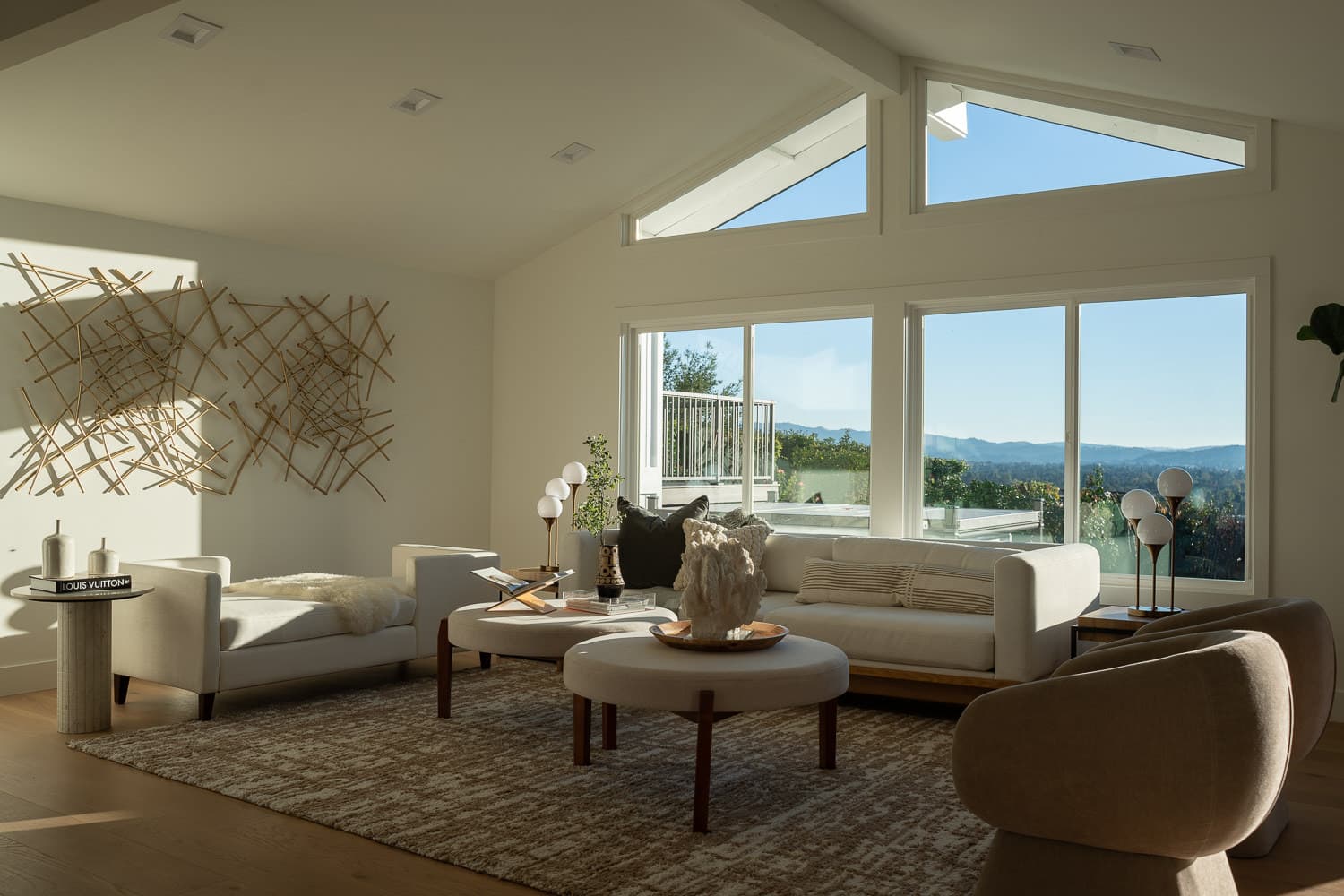
Interior design for Pacific Heights homes
Pacific Heights is one of San Francisco's grandest residential neighborhoods, defined by ornate Victorians and Edwardians, formal early-twentieth-century mansions, and condominium floors carved into older buildings. The streets climb steeply toward the crest of the hill, and many homes look north over the bay toward the Marina, Alcatraz, and the Golden Gate. Interior design here is rarely a blank-canvas exercise. It is the careful work of bringing a heritage home up to the standard of life a high-end client expects today, without erasing the bones that make the house worth living in.
A typical Pacific Heights client wants the interior to feel current, quiet, and tailored, while keeping the plaster crown moldings, the bay windows, the wide-plank or herringbone floors, and the proportions that newer construction cannot replicate. The brief usually centers on a few rooms doing a lot of work at once: a kitchen that reads as part of the living space rather than a service area, primary suites with real closet and bathroom volume, and main-floor rooms that hold the light and the view. Storage, acoustics, and lighting matter as much as finishes, because grand rooms are unforgiving when those details are wrong.
What changes when the home is historic
The reason interior design in Pacific Heights is different from interior design almost anywhere else in the Bay Area is the regulatory reality around older and historic buildings. San Francisco reviews building work through the Planning Department and the Department of Building Inspection, and many Pacific Heights properties are old enough to trigger historic-resource review when exterior or structural changes are proposed. That review can shape what an interior project is allowed to touch, how windows and facades are handled, and how long approvals take.
For purely cosmetic interior work, finishes, paint, cabinetry, lighting, furnishings, the planning burden is usually light. The moment a project moves walls, alters the building envelope, changes windows, or affects systems, it moves into permit territory, and on a potential historic resource that path deserves respect. We plan the interior with that line in mind from the first meeting, so the design you fall in love with is the design that can actually get built. We do not invent timelines or fees here; the specifics depend on your block, your building, and the current city process, and we confirm them with the relevant departments for your address.
The design-build difference
New Key Construction is a design-build firm, which means one team carries your Pacific Heights project from the first concept through the finished room. You are not handing a designer's drawings to a separate contractor and hoping the two agree later. Design and construction sit at the same table, so what gets drawn is what gets built, and the budget conversation is honest from day one.
Three things define how we work:
- One team for design and build. The people who design your interior are accountable for delivering it. That removes the gap where ideas get value-engineered into something you never approved.
- Priced options up front. Before you commit, you see real cost ranges tied to real choices. You decide where to invest and where to hold back with numbers in front of you, not after demolition has started.
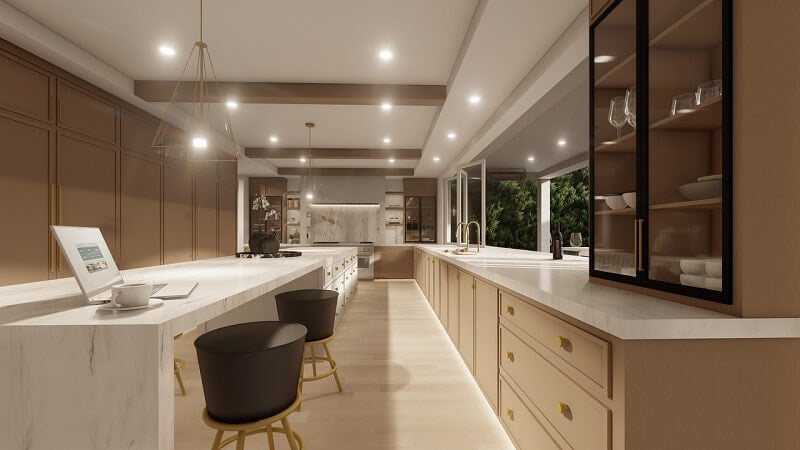
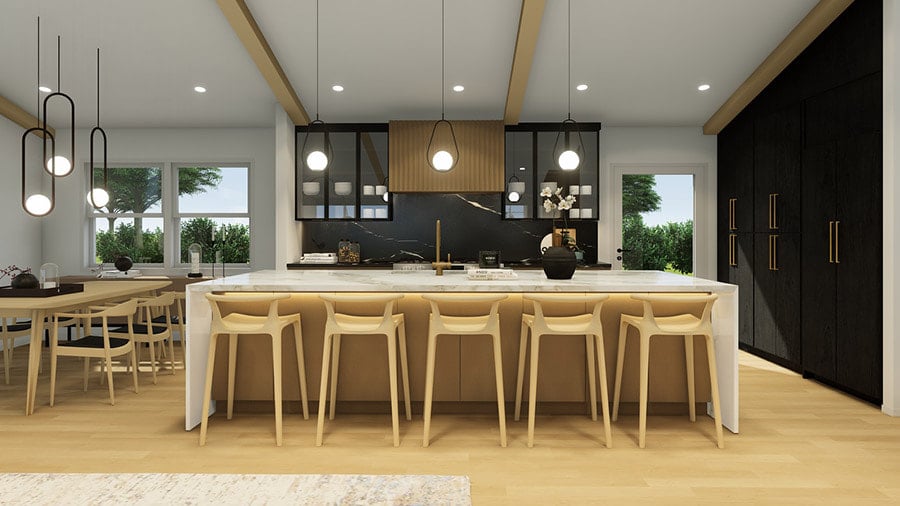
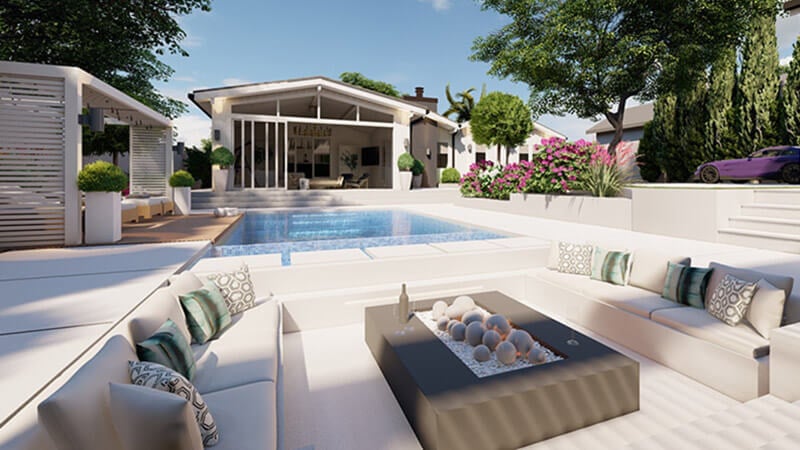
- 3D renderings before permits. We produce photorealistic renderings of your spaces before drawings go to the city. You see the kitchen, the bath, the living room as they will look, and you make changes on screen, where changes are free, rather than on site, where they are expensive.
For a heritage home, that sequence is especially valuable. Seeing a rendered room against the existing moldings and window lines tells you immediately whether a design respects the house or fights it, long before a permit is filed or a wall is opened.
How a Pacific Heights project runs
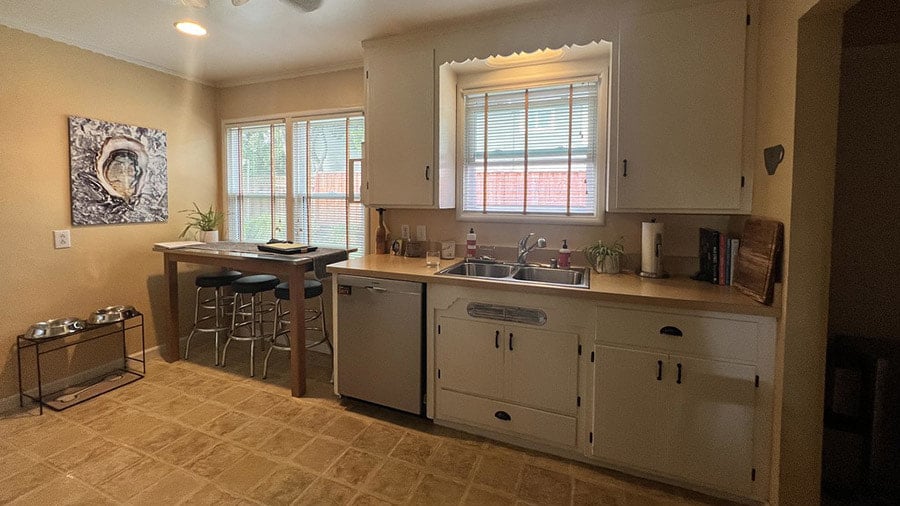
We start with discovery and a site survey, often including a 3D scan, so we are designing against the home's true dimensions rather than guesses. From there we move into design and produce renderings, run a parallel cost analysis so the pricing keeps pace with the design, and prepare any permit set the scope requires. Construction follows with the same team, and we hand the finished home back with the details documented. Because the studio handles both halves, the schedule and the budget are managed as one plan instead of two.
The result Pacific Heights clients are after is an interior that feels inevitable: modern comfort and modern systems inside a home that still reads as the period it came from. That balance is the whole point of working with a single design-build team that understands both the craft of the interior and the realities of building in this neighborhood.
FAQ
Do I need a permit for an interior design project in Pacific Heights?
It depends on scope. Cosmetic work like paint, finishes, furnishings, and many cabinetry or lighting updates typically does not require a building permit, while moving walls, altering windows or the building envelope, or changing structural and major systems generally does. Because many Pacific Heights homes are old enough to involve historic review, we confirm the exact requirements for your address with the city before committing to a plan.
Can you modernize a Victorian or Edwardian without destroying its character?
Yes, and that is the point of how we work. We design to keep the elements that give these homes their value, the moldings, bay windows, original floors, and proportions, while updating layout, lighting, systems, and finishes for how you live now. Seeing the design as a 3D rendering against the existing details makes it clear early whether a choice honors the house.
What does design-build mean for my budget?
It means you get priced options before you commit, and the people designing your interior are the same people building it. There is no handoff where the design gets quietly changed to fit a separate contractor's number. You make investment decisions with real costs in front of you, and the budget is managed alongside the design rather than discovered later.
Why do you create 3D renderings before filing permits?
Because changes are free on screen and expensive on site. Renderings let you approve the look and feel of each room before drawings go to the city, which is especially useful on a historic property where you want to see exactly how a new design sits within the original architecture. It also gives the city and any review process a clear picture of the intent.
Do you handle furnishing and styling, or only the construction side?
We cover the full interior, from the architectural and built elements through finishes, lighting, cabinetry, and the furnishing and styling that make a room feel complete. Because one team owns the whole project, the built work and the furnishings are designed to belong together rather than assembled from separate, disconnected efforts.