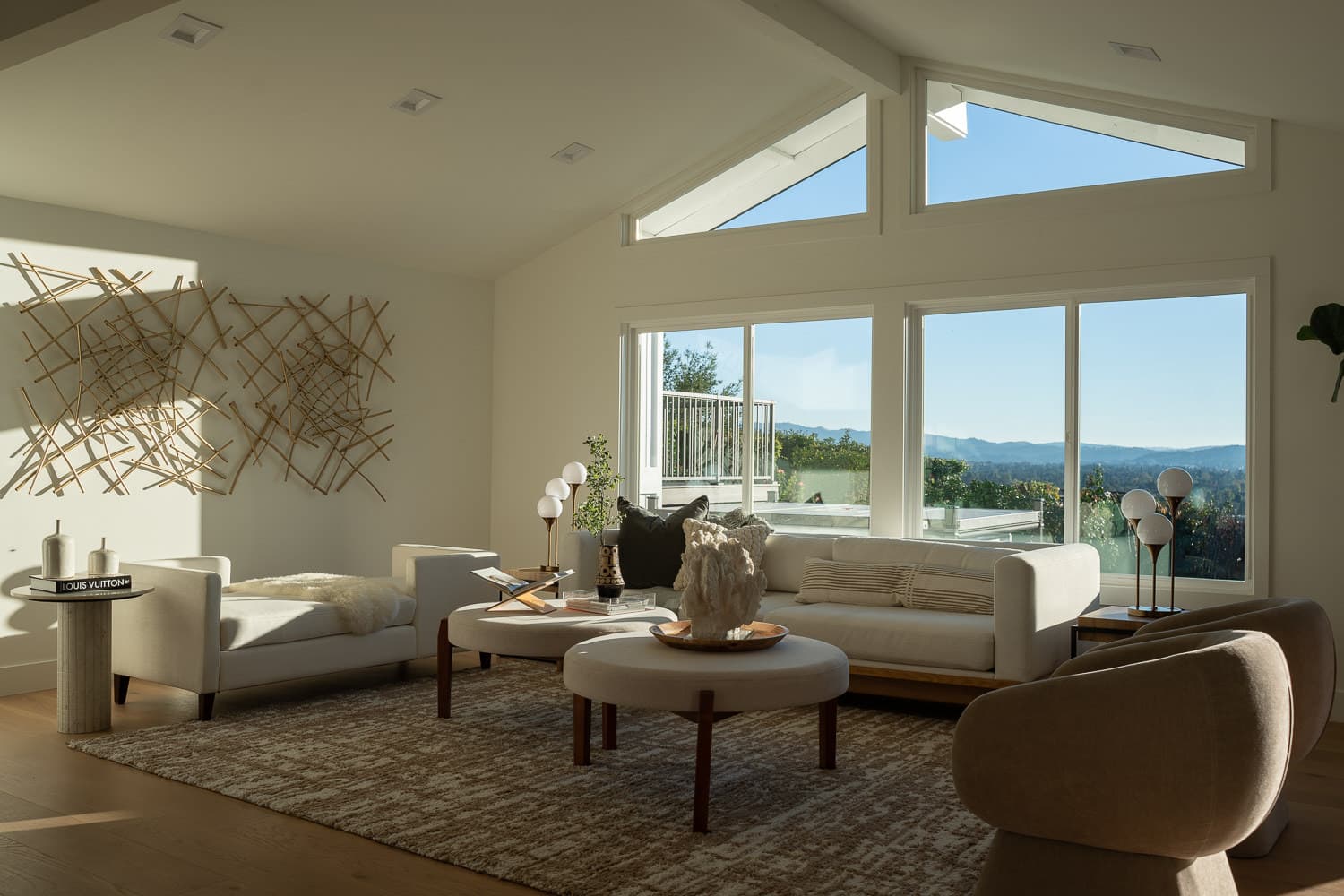
Woodside homes do not look like anywhere else on the Peninsula. Houses sit far back on multi-acre parcels, screened by heritage oaks and redwoods, reached by long private drives, and often surrounded by paddocks, barns, and equestrian fencing. The look ranges from low-slung California ranch to warm contemporary, but the common thread is the same: a high-end client who wants the finished home to feel like it grew out of the land, not like it was dropped onto it. When that client is weighing a ground-up build, a whole-home remodel, or a new wing, the question underneath every other question is who actually owns the outcome. Design-build answers that by putting one team in charge of both the design and the construction.
What design-build means, stated plainly
In the traditional path, you hire an architect, get drawings, then send those drawings out to contractors to bid. The price comes back at the end, often well above what you imagined, and the redesign loop begins. Design-build collapses that into a single accountable team. We design and we build, under one contract, so the people drawing the home are sitting next to the people who will frame it, grade for it, and meet the inspector on site.
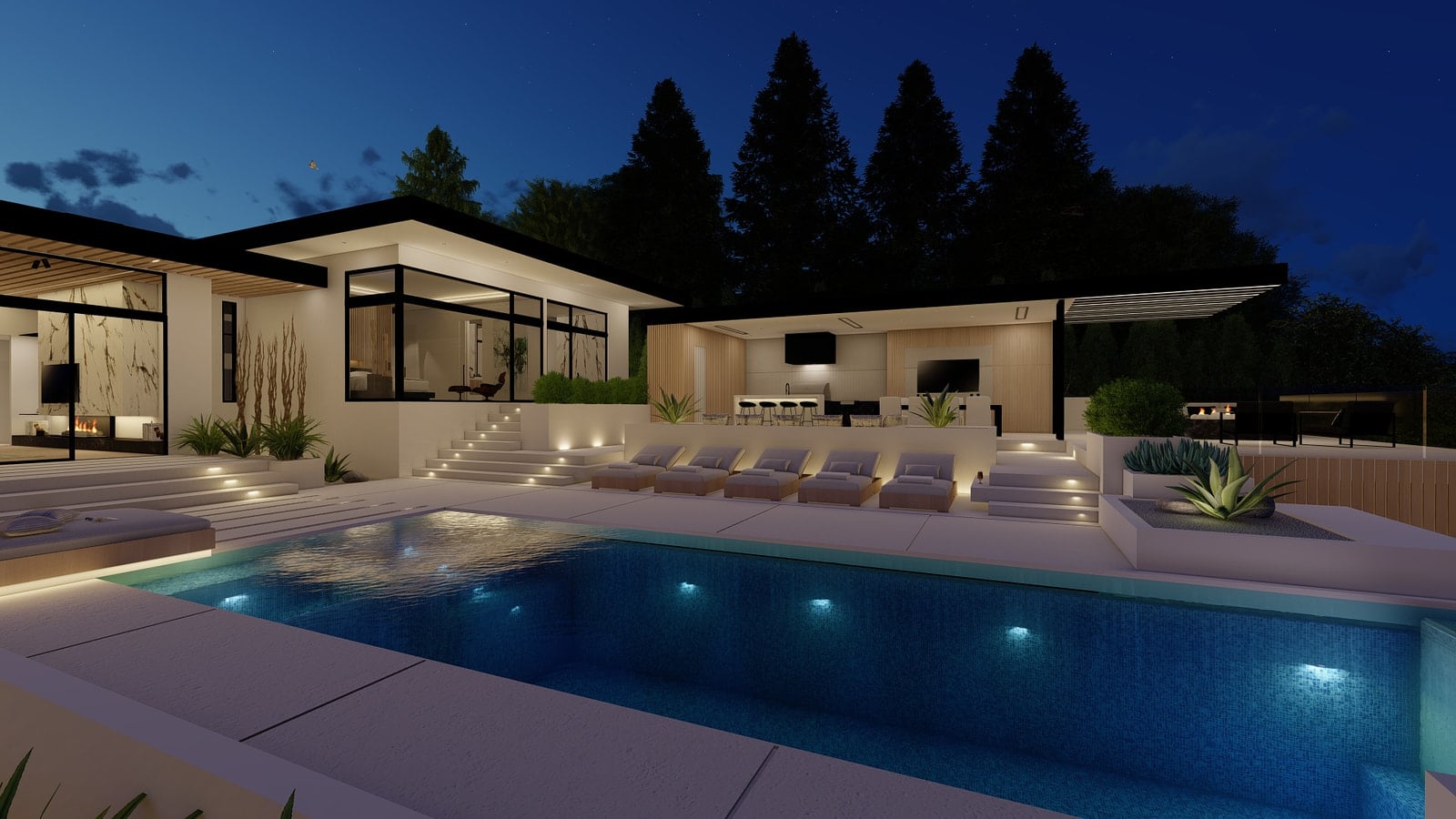
The practical differences for a Woodside project come down to three things. One team for design and construction, so there is no finger-pointing between architect and builder when something on a sloped, wooded lot does not go to plan. Priced options up front, so you see real numbers tied to real choices early, while they are still easy to change, instead of after the drawings are locked. And 3D renderings before permits, so you can walk through the rooflines, window placement, and how the home reads from the drive before a single application is filed.
Why design-build fits Woodside lots specifically
The reason this model matters more here than in a flat, gridded suburb is the land itself. Woodside parcels come with constraints that are expensive to discover late, and design-build is built to surface them early.
Trees are the first one. Many Woodside lots carry significant oaks, redwoods, and other protected specimens, and the Town takes tree preservation seriously. Where a home can sit, where a driveway can run, and how you stage construction are often dictated by which trees must be protected and what their root zones require. When the same team designs and builds, the home is shaped around the trees from the first sketch rather than redesigned after an arborist flags a conflict.
Grading and drainage are the second. Hillside and sloped sites mean cut and fill, retaining structures, and managing how water moves across the property. These are not afterthoughts you bolt onto a finished design. They drive foundation type, access, and cost, and they belong in the conversation while the floor plan is still fluid.
Septic and water are the third. Much of Woodside is not on municipal sewer, so projects depend on septic systems and well or water-district supply. Adding bedrooms or a guest structure can change septic requirements, and that has to be understood before you commit to a program. A design-build team carries that reality into the priced options instead of letting it ambush you at permit time.
How the process runs
We start with the site and the program together. Before drawings, we walk the parcel, look at the trees, the slope, the access, and the existing systems, and we talk through how you actually want to live on the property. From there we develop the design while pricing it in parallel, so each meaningful choice arrives with a number attached. You are never choosing between a design you love and a budget you can live with after the fact, because the two are reconciled as we go.
Once the direction is set, we produce 3D renderings so you can see the home in context, from the approach and from the key rooms, and adjust while changes are still inexpensive. Only then do we move into construction documents and the permitting process with the Town of Woodside and the relevant county and fire agencies. Because the builder helped shape the drawings, the set that goes in for review is one we already know we can build on your specific lot.
Through construction, you keep talking to the same team. The estimator who priced your options, the designer who drew your renderings, and the field crew building the home are one organization with one point of accountability. On a rural site where weather, access, and inspections all interact, that continuity is what keeps a long project from drifting.
What a Woodside client gets from one team
The payoff is fewer surprises and a home that respects its setting. You get early clarity on the budget, a design that was built around your trees and your grade instead of fighting them, and renderings that let you make confident decisions before money is committed to permits. You also get a single relationship to manage across what is often a multi-year journey, from first walk of the land to the day you move in.
FAQ
How is design-build different from hiring an architect and a contractor separately in Woodside?
With separate hires, design and price are disconnected, and you often learn the real cost only after the drawings are done. Design-build puts both under one contract, so the team that designs your home is the team that builds it. You get priced options as the design develops and one party accountable for the result, which matters on complex Woodside lots where tree, grading, and septic issues cross between design and construction.
Do you handle the Woodside permitting and approvals?
Yes. Because we design and build, we carry your project through the construction documents and the permit process with the Town of Woodside and the relevant county and fire agencies. We do not quote specific fees or timelines here because they depend on your scope and site, but having the builder involved in the drawings tends to make the review set cleaner from the start.
Can you work around protected trees and steep grade on my lot?
That is exactly where design-build earns its keep. We assess trees, slope, drainage, and access before the design is fixed, so the home is shaped around protected specimens and the natural grade rather than forcing the land to fit a plan. Catching these constraints early is far cheaper than redesigning after a permit reviewer or arborist raises them.
When do I see what the finished home will look like?
Before permits. We produce 3D renderings so you can experience the rooflines, materials, and how the home reads from the drive and the key interior rooms while changes are still easy and inexpensive to make. Only after you are confident in the design do we move into permitting and construction.
Does design-build work for remodels and additions, not just new homes?
Yes. The same one-team model applies to whole-home remodels, new wings, and accessory structures. On a remodel or addition we still price options up front and account for how the change affects existing systems, including septic capacity and drainage, before the work is committed.