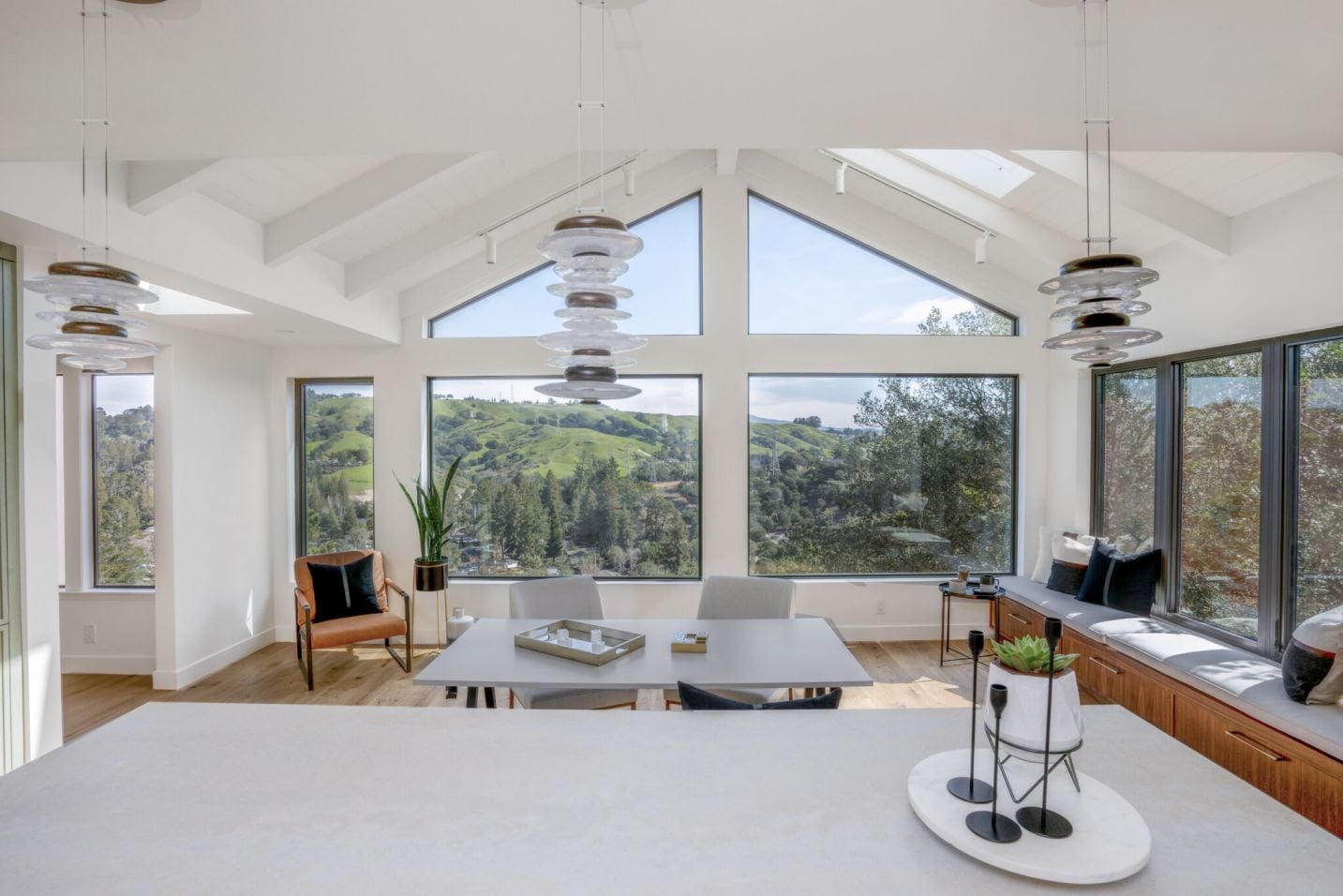
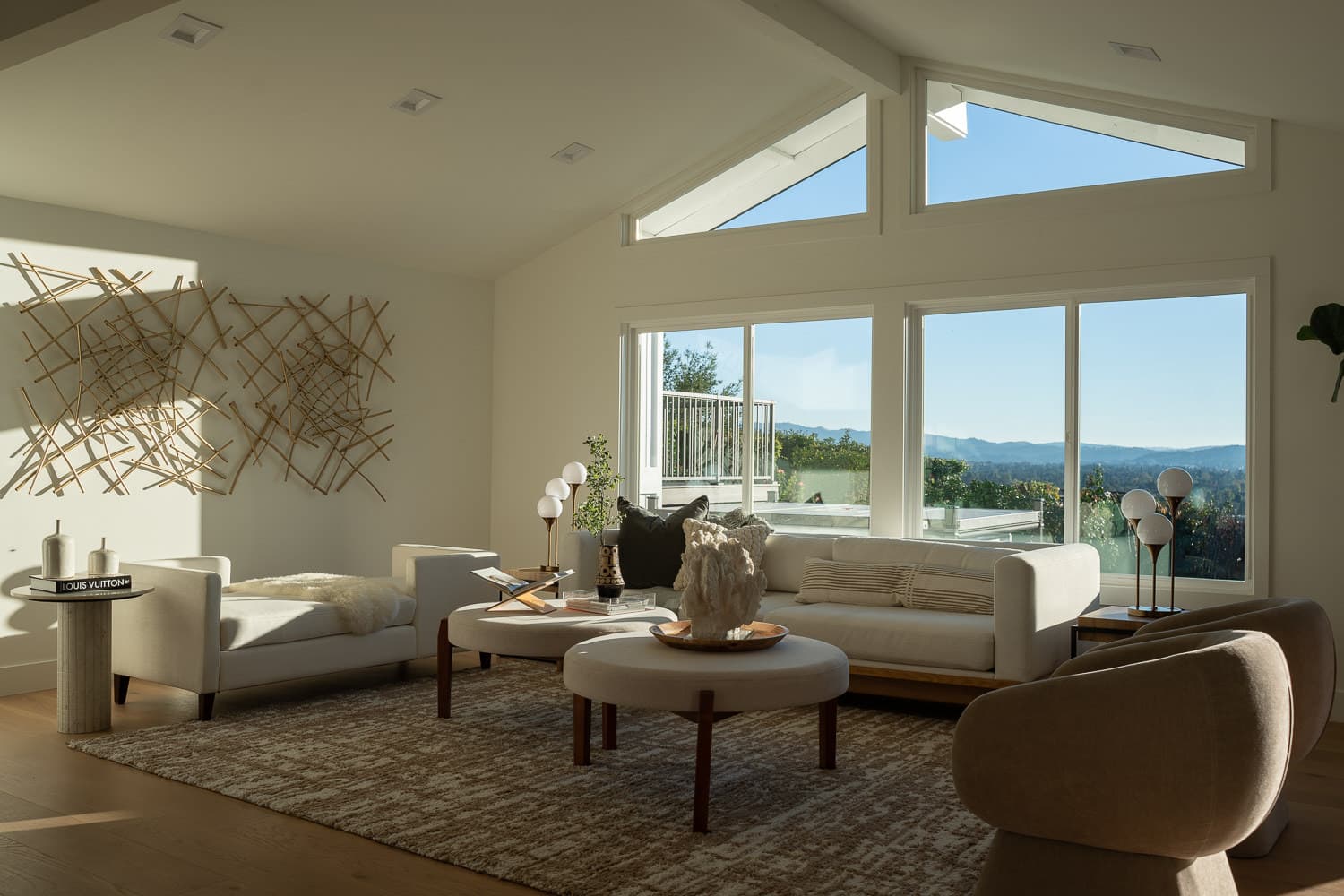
What design-build means for a Palo Alto home
Design-build means one team carries your project from first sketch through final inspection. Instead of hiring an architect, then bidding the drawings to a separate general contractor, you work with a single firm that designs, prices, and builds. For Palo Alto homeowners, that structure removes the most common source of friction: the gap between what gets drawn and what can actually be built for the budget.
New Key Construction is a Bay Area design-build firm serving Palo Alto and the surrounding Peninsula. We bring the designer, the builder, and the person who tracks the budget into the same room from day one. You get priced options up front and 3D renderings before we file for permits, so the decisions happen on screen, not in the field after demolition has started.
The homes we work on here
Palo Alto's housing stock is unusually specific, and design-build has to respect that. A large share of the city's mid-century neighborhoods are Eichlers, the post-and-beam, flat-roof, glass-walled homes that define streets in areas like Greenmeadow and Green Gables. Owners who love these houses usually want to preserve the open plan, the indoor-outdoor flow, and the original lines while updating insulation, glazing, kitchens, and baths to current standards. That is delicate work, and it is far easier when the people designing the addition are the same people who have to frame it into an existing beam structure.
Beyond the Eichlers, Palo Alto has Spanish revival and craftsman homes near Professorville and Old Palo Alto, some of which carry historic status, plus newer builds throughout Crescent Park and Barron Park. A high-end Palo Alto client tends to want the same things across all of these: a finished look they can see before committing, a real number attached to each choice, and a single point of accountability when something needs to change.
The local planning reality, plainly
Palo Alto is known for careful, deliberate permitting, and the timeline matters to how you plan a design-build project. Several local rules shape what is feasible:
- The single-story overlay and Eichler design guidelines. Many Eichler tracts sit under a single-story overlay that limits second-story additions, and the city maintains design guidelines aimed at keeping Eichler character intact. If you own one of these homes, your addition options are constrained in ways a generic contractor may not anticipate. We design within those limits from the start.
- Historic review. Homes on or eligible for the historic inventory face additional review. That review goes more smoothly when the design package is complete and clearly presented.
- The tree ordinance. Palo Alto protects certain trees, and protected trees near your build footprint can affect where you can excavate, stage, and add square footage. This is worth knowing before the design is final, not after.
We do not promise to shortcut any of this. What design-build does is reduce surprises. Because the team that designs your project also has to build and permit it, the drawings we submit are buildable, costed, and shaped around the rules that apply to your specific lot.
How our design-build process works
The advantage of one team is that the handoffs disappear. Here is the flow:
- Discovery and brief. We learn how you live, what the house needs to do, and the range you want to invest.
- Design with priced options. As the design takes shape, you see costs attached to real choices. A wider opening, a different roof detail, a higher-spec window package: each one comes with a number, so trade-offs are clear while they are still easy to make.
- 3D renderings before permits. You see your kitchen, your addition, your remodeled bath rendered in 3D before we submit anything to the city. Changing a rendering is cheap. Changing framed walls is not.
- Permitting. We prepare and carry the submittal, designed around Palo Alto's overlays, historic rules, and tree protections where they apply.
- Construction. The same team builds what you approved, and the budget you signed off on is the budget we manage against.
Why one team beats the split model in Palo Alto
In the traditional split model, the architect draws, the contractor bids, and any gap between the two becomes your problem in the form of change orders. In a city where permitting is slow and the housing stock is sensitive, that gap is expensive. Design-build closes it. One contract, one team, one budget, and a design that was buildable and priced before it ever reached the permit counter. For a Palo Alto remodel or addition, that is the difference between a project that drifts and one that holds its shape.
FAQ
What is design-build and how is it different from hiring an architect and contractor separately?
Design-build puts design and construction under one contract and one team. Instead of paying an architect to draw plans, then bidding those plans to a general contractor and absorbing the gap between them, you work with a single firm responsible for the design, the price, and the build. That means fewer change orders, one point of accountability, and a budget that was set during design rather than discovered during construction.
Can a design-build firm work on an Eichler in Palo Alto?
Yes, and the design-build structure is especially well suited to Eichlers. These post-and-beam homes have specific structural and aesthetic constraints, and many sit under a single-story overlay with city design guidelines that limit what you can add. Having the same team design and build means the addition is conceived around the existing beam structure and the applicable Eichler rules from the start, rather than redrawn in the field.
Will I see what my project looks like before construction starts?
Yes. We produce 3D renderings before we file for permits, so you can see your remodel or addition and adjust it while changes are still inexpensive. You also receive priced options as the design develops, so every meaningful choice comes with a cost attached.
How does Palo Alto's permitting process affect my timeline?
Palo Alto is known for careful, deliberate review, and homes that are historic or sit under special overlays can face added scrutiny. We do not promise to shortcut that. Because our design-build team also handles permitting, we prepare a complete, buildable, and costed package shaped around the overlays, historic rules, and tree protections that apply to your lot, which helps the submittal move with fewer revisions.
Does the tree ordinance affect my remodel or addition?
It can. Palo Alto protects certain trees, and a protected tree near your build footprint can affect where you can excavate, stage materials, and add square footage. We account for tree protection during design rather than letting it surface as a problem mid-project, which is one more reason the single-team approach fits this city.