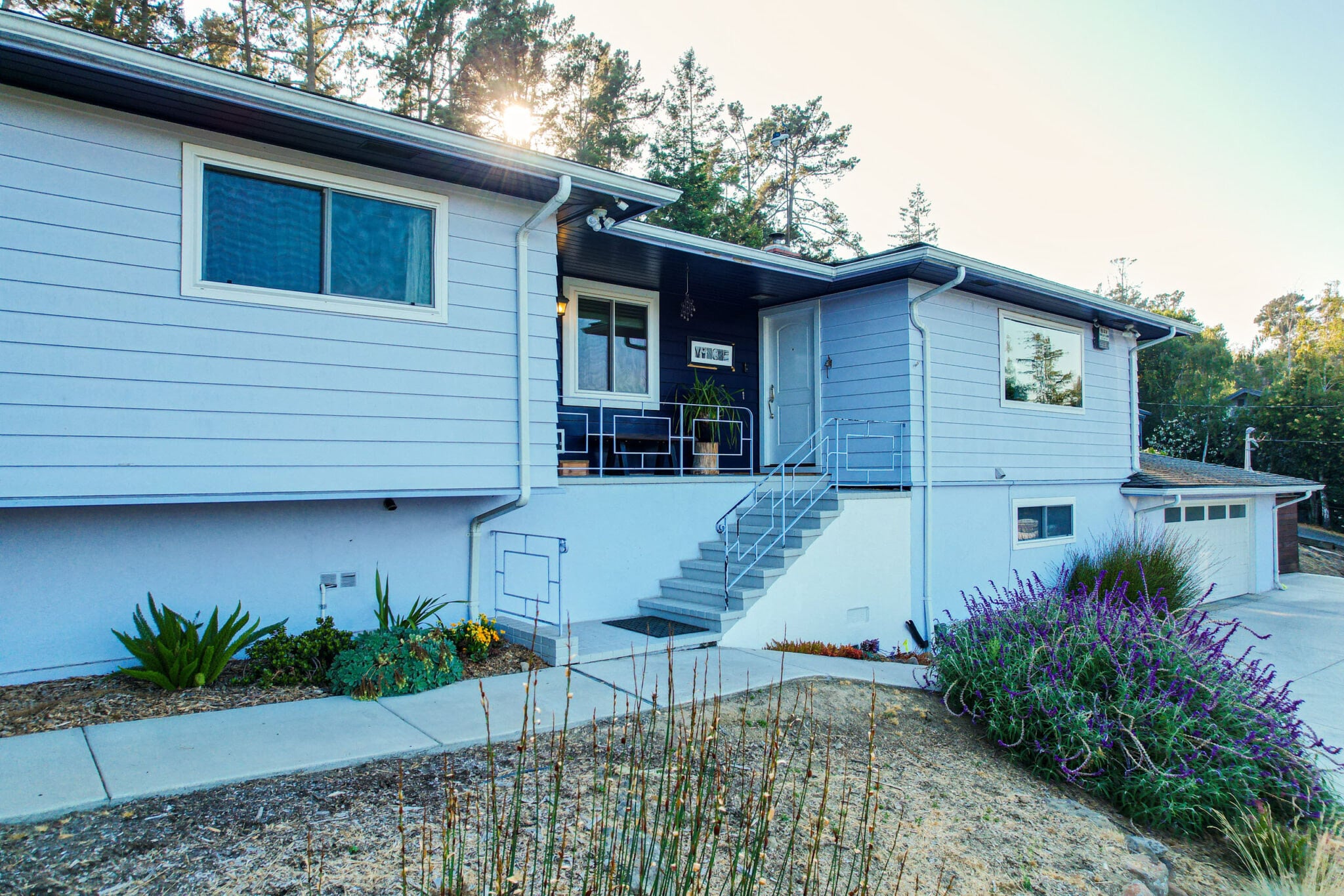
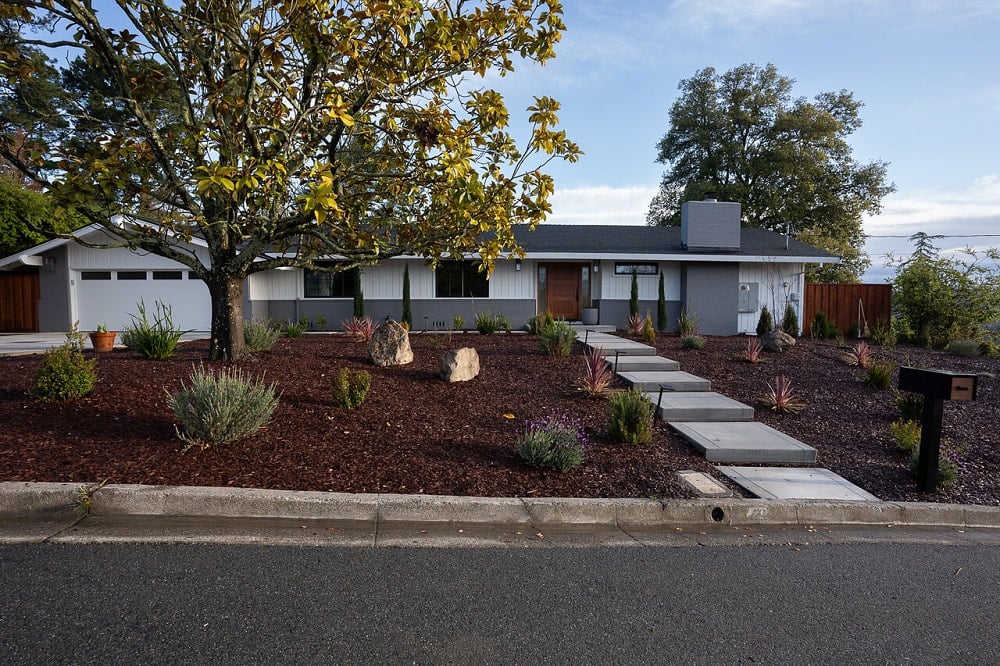
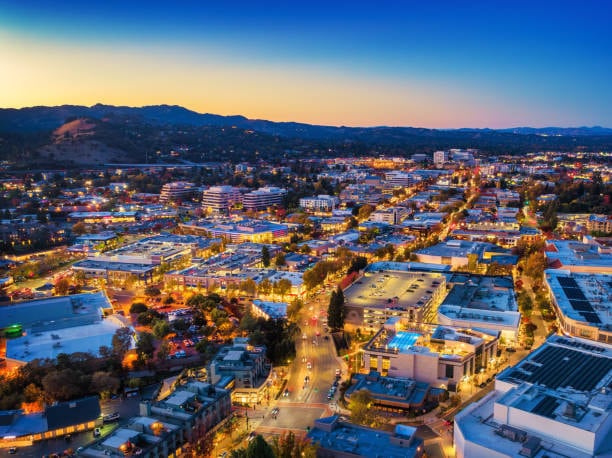
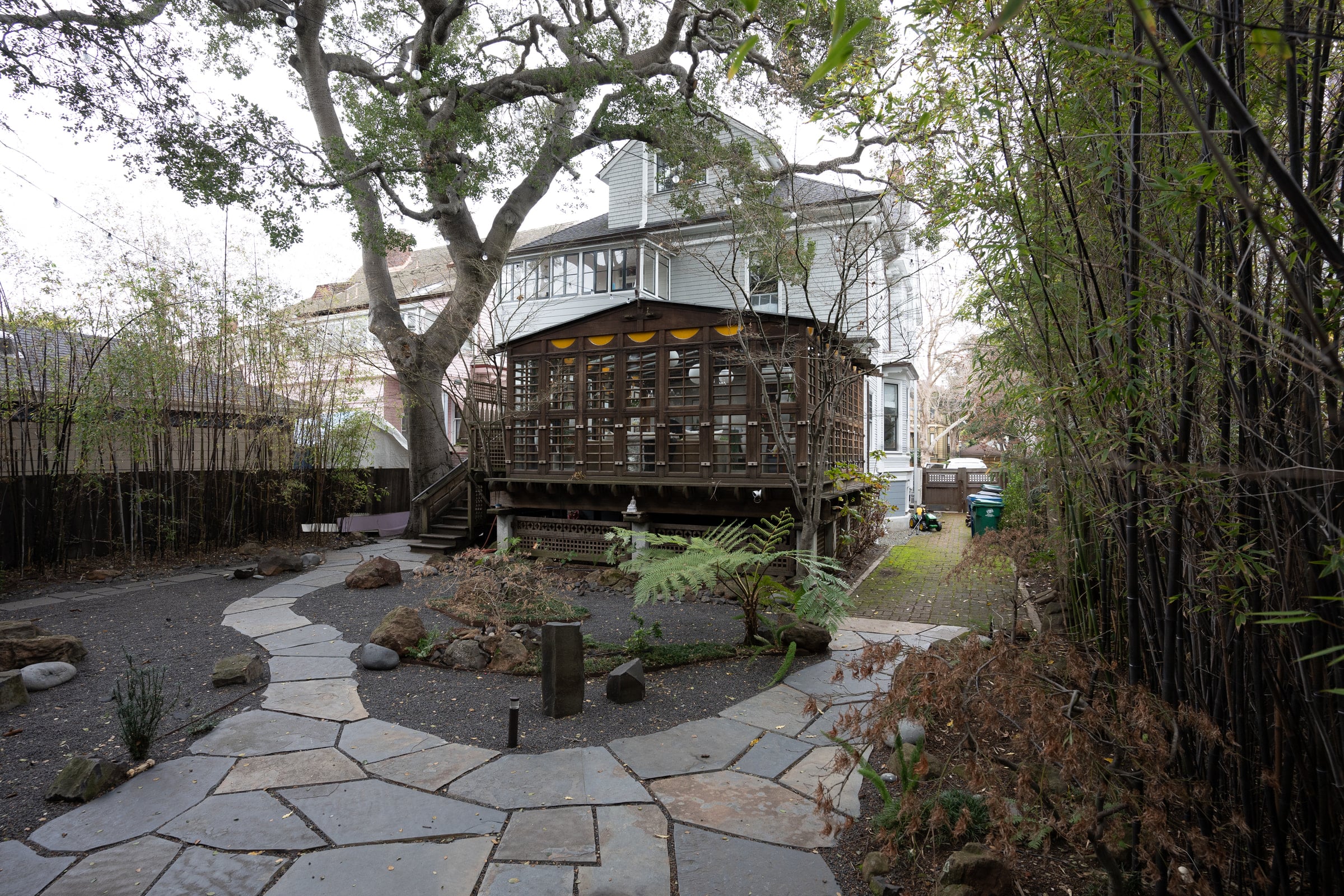
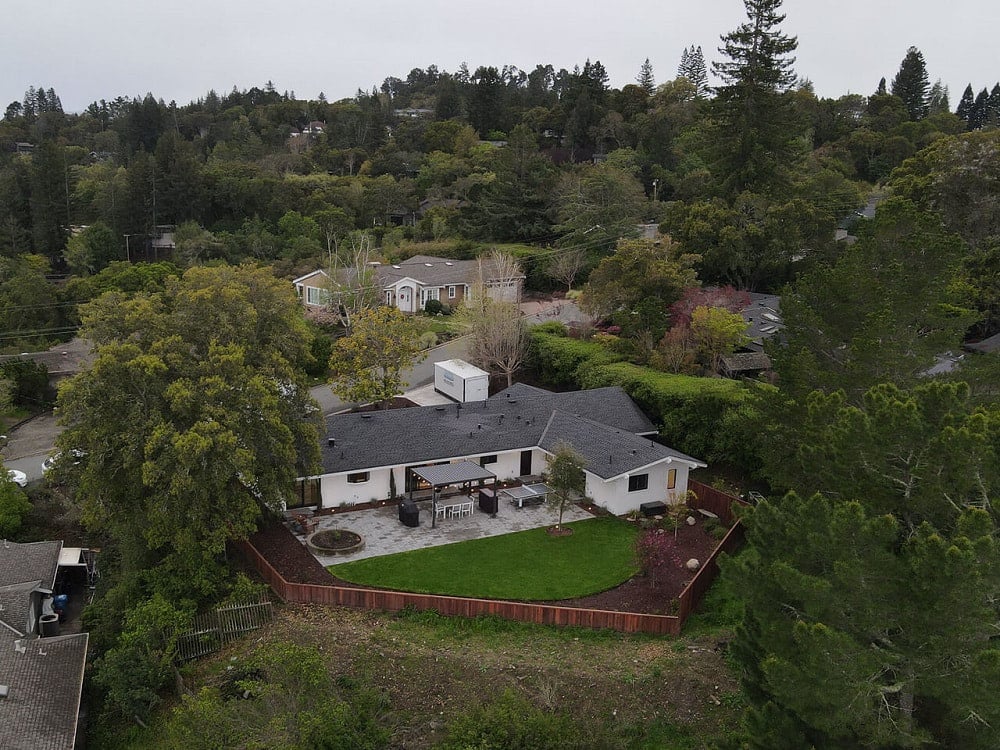
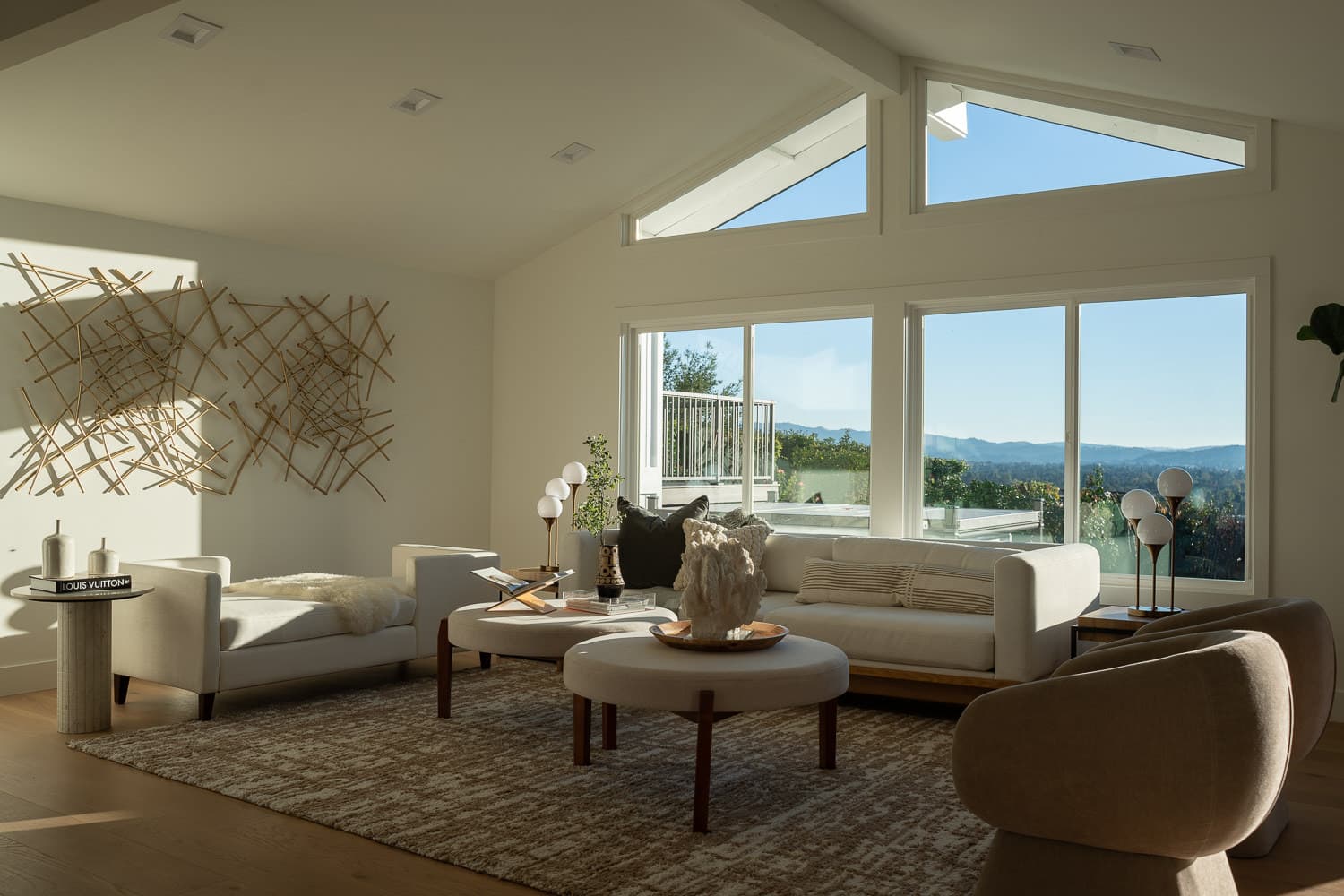
Tiburon yards are rarely flat, and that is the whole design problem. Most homes on the peninsula sit on a hillside, looking out toward the bay, Angel Island, or the San Francisco skyline, with the buildable ground stepping down in grades that a level lawn was never meant for. The architecture ranges from mid-century and contemporary glass boxes that want the view to stay unbroken, to traditional and shingle-style homes that want a landscape with more structure and softness. A high-end Tiburon client is usually not asking for a garden in the abstract. They want to make the slope usable: a terrace that holds a dining table without feeling like a ledge, a deck that reads as another room, a path down to a lower yard that does not turn into a cliff, and planting that frames the water instead of hiding it.
What outdoor living means on a Tiburon hillside
On a steep lot, "outdoor living" is mostly a structural conversation before it is a planting one. The square footage you actually get to use comes from how you cut and hold the grade: retaining walls, stepped terraces, decks cantilevered toward the view, and stairs that connect levels without eating the whole yard. That is where the design work earns its keep. We start by mapping where the sun lands, where the wind comes off the bay in the afternoon, and which sightlines are worth protecting, then we shape the hardscape around those facts.
From there the outdoor rooms follow. An upper terrace off the kitchen for everyday meals. A fire feature or built-in seating placed where it blocks wind rather than the view. An outdoor kitchen sized to how the household actually cooks, not a showroom counter that never gets used. Lower-yard space for a spa, a lawn panel, or a quiet planted garden, reached by stairs or a switchback path that respects the slope. Lighting that lets the terrace work after dark and pulls the eye toward the water, not the fence line.
Planting that suits the site, not fights it
Marin hillsides are dry in summer, often windy, and frequently shaded by mature trees or protected by them. The planting plan has to respect all three. We lean toward layered, drought-tolerant and Mediterranean-climate planting that holds a slope, reads as intentional from the house and from the street, and does not demand constant water. Trees on the lot are usually an asset and sometimes a constraint, so we design around the canopy you have rather than clearing it. Good planting on a view lot is restrained on purpose. It frames the bay, softens the hard edges of walls and decks, and keeps the long view as the thing your eye goes to.
The Tiburon permit reality for landscape work
This is where outdoor projects in Tiburon get more involved than a flat-lot garden. Much of the peninsula falls under the Town of Tiburon, with some areas in Belvedere or unincorporated Marin County, and each has its own planning rules, so the first step is confirming which jurisdiction your property sits in. Retaining walls above a certain height, decks, grading on a slope, and tree work commonly trigger review, and hillside and view considerations are taken seriously here. Rather than quote specific thresholds, we confirm them with the right planning department for your address before design hardens, because the structure of your terraces and walls depends on what review path applies. Building the permit reality into the design from the start is what keeps a hillside outdoor-living project from stalling halfway through.
Why design-build matters on a sloped lot
When the landscape, the structure that holds the slope, and the build are split across separate firms, the seams are where hillside projects go wrong. A design that ignores how a wall actually gets built, or a budget that only appears after drawings are done, costs you time and money you cannot get back on a steep site. We work design-build, which means one team carries your project from concept through construction.
Three things follow from that. First, one team owns both the design and the build, so the terrace that gets drawn is the terrace that gets built, with no handoff gap. Second, you see priced options up front, so the trade-offs between a poured wall and a different material, or a larger terrace versus a longer view deck, are real numbers you decide on, not surprises later. Third, we produce 3D renderings before permits, so you can stand in your future outdoor room and see how the terrace meets the view, how the stairs land, and how the planting frames the bay before anything is submitted or built. On a Tiburon hillside, where small changes in grade and wall height change everything, seeing it first is the difference between approving a drawing and trusting a result.
Getting started
A first conversation is about your lot and how you want to live outside on it. We walk the site, look at the grade, the trees, the wind, and the view, and talk through what the planning path looks like for your address. From there we move into design with priced options and renderings, so the plan you approve is one you have already seen and can afford.
FAQ
Do landscape projects in Tiburon need permits?
Often, yes. Retaining walls above a certain height, decks, grading on a slope, and some tree work commonly trigger planning or building review, and the specifics depend on whether your property is in the Town of Tiburon, Belvedere, or unincorporated Marin County. We confirm the requirements with the correct planning department for your address before the design is finalized.
Can you build usable outdoor space on a steep hillside lot?
That is most of what we do here. Usable space on a slope comes from how the grade is cut and held with terraces, retaining walls, decks, and stairs. We design the structure and the outdoor rooms together so the hillside becomes terraced living space instead of a drop-off.
What does design-build mean for my landscape project?
It means one team handles both the design and the construction, instead of hiring a designer and a separate builder. You get priced options up front and 3D renderings before permits, so the plan you approve is the plan that gets built, with fewer surprises in budget or schedule.
Will the planting need a lot of water and upkeep?
We design with drought-tolerant and Mediterranean-climate planting suited to Marin's dry, often windy summers, layered to hold a slope and frame the view. The goal is a landscape that looks intentional and stays manageable rather than one that demands constant water and maintenance.
Can I see the design before committing to construction?
Yes. We produce 3D renderings before permits so you can see how the terraces, decks, stairs, and planting come together and how they meet your view. You approve a design you have already seen, with priced options, before any building begins.