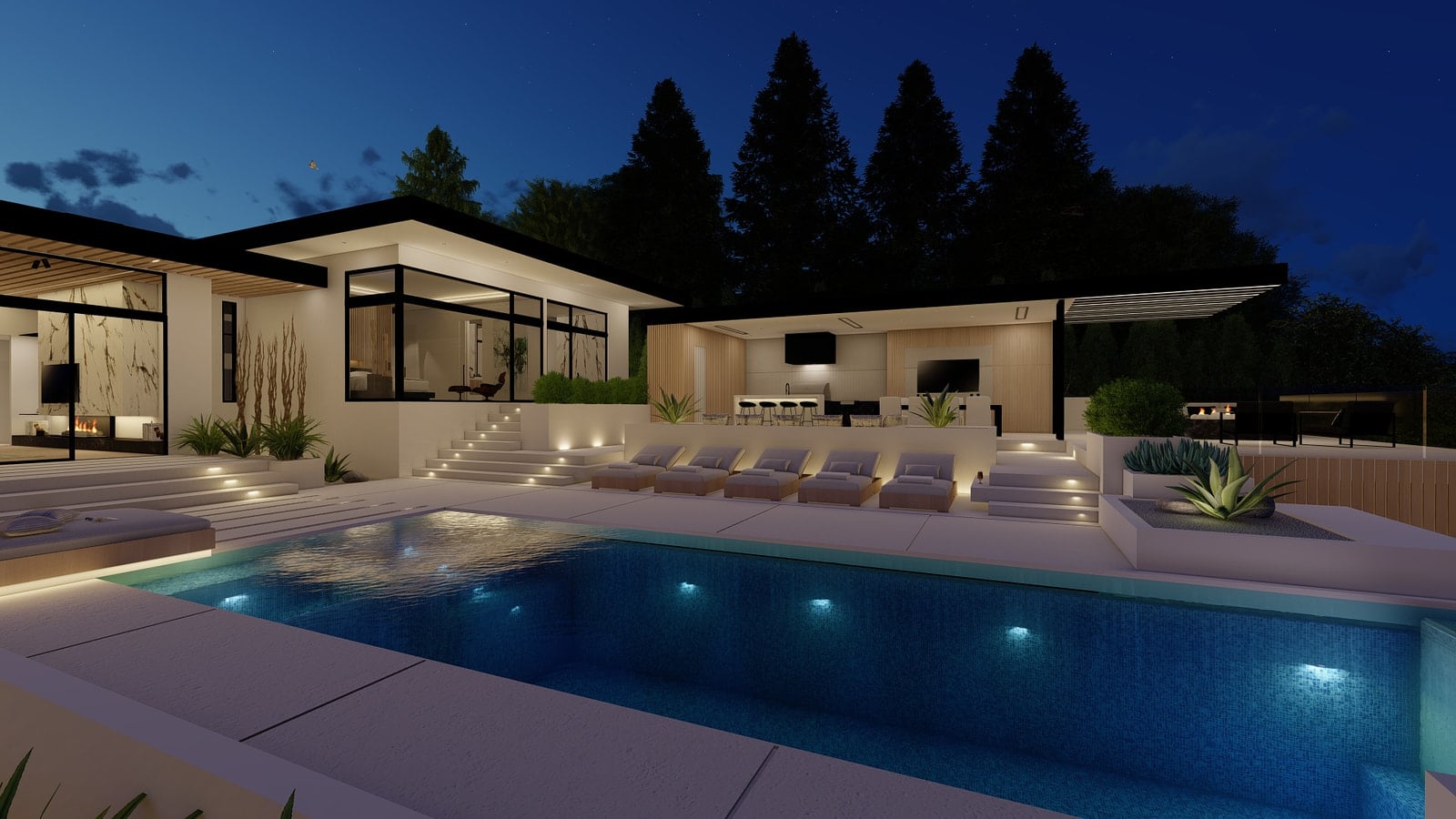
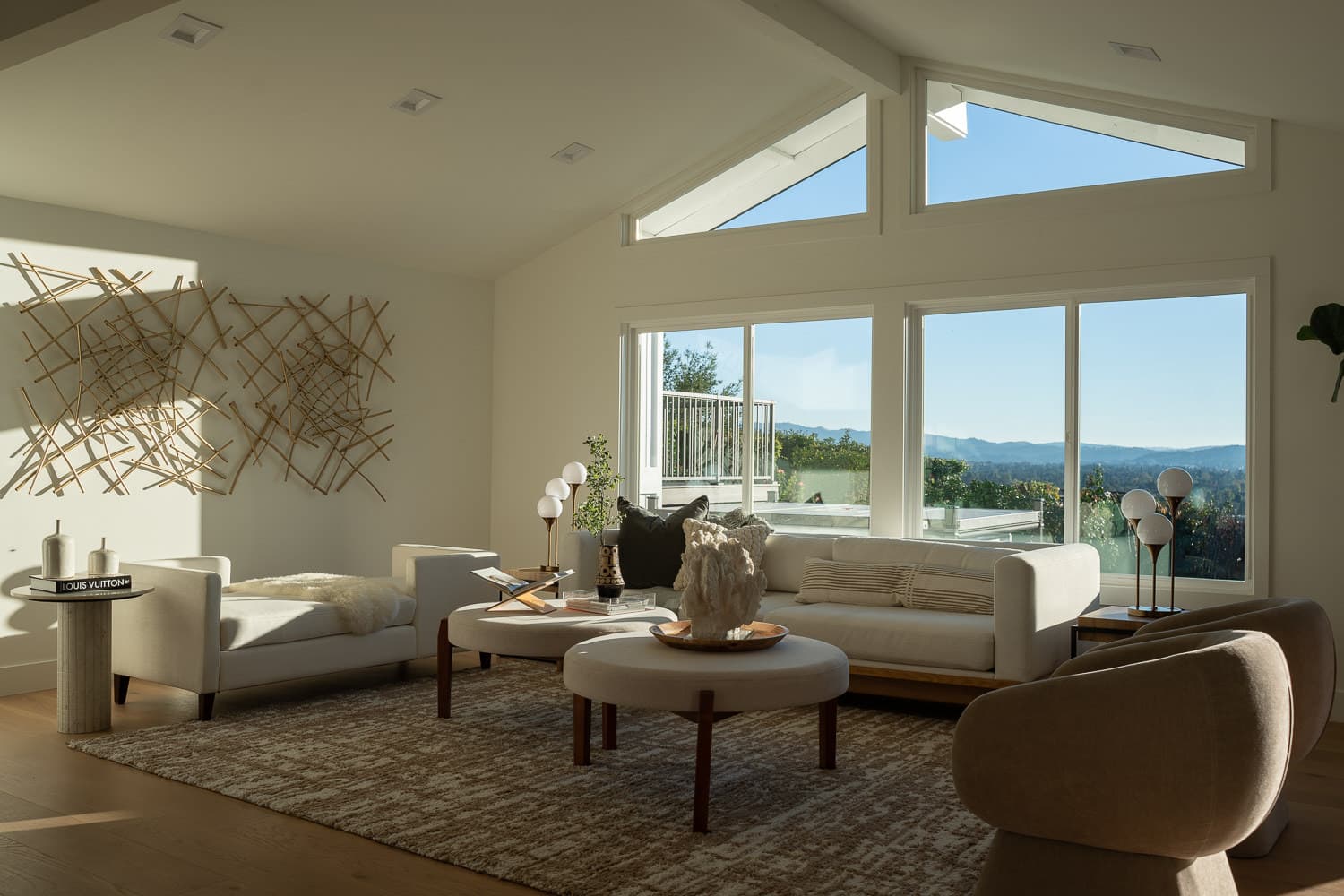
Los Altos Hills is a town of large, private lots and quiet, view-driven living. Most parcels sit on at least an acre, homes step back from the road behind gates and native landscaping, and the prevailing look runs to contemporary estates: clean horizontal massing, glass that opens to the hills, warm natural materials, and seamless indoor-outdoor flow. The high-end client here usually is not chasing a quick cosmetic refresh. They want a ground-up custom home, a major remodel and addition, or a property reimagined as a single cohesive estate. That kind of project lives or dies on coordination, and coordination is exactly what a design-build model is built to deliver.
What design-build actually means here
Design-build means one team carries your project from first sketch to final walkthrough. Instead of hiring an architect, then bidding the drawings to contractors, then refereeing between the two when the numbers do not match the vision, you work with a single firm that owns design and construction together. For a Los Altos Hills estate, that structure matters more than usual, because the design decisions and the build constraints are tangled together from day one.
The differentiator is plain. One team for design and construction. Priced options up front, so you see what each choice costs while you can still change it. And 3D renderings before permits, so you are approving a home you can actually see rather than interpreting a floor plan. You make decisions with both the aesthetic and the budget in front of you, at the same time.
The Los Altos Hills planning reality
Los Altos Hills is a rural-residential town, and its rules reflect that character. Lots carry a one-acre minimum, and what you can build is governed by floor area and development area limits tied to your specific parcel, not a flat square-footage allowance. Two homes on similarly sized lots can have very different buildable envelopes once slope, setbacks, and existing site conditions are factored in. This is the first place a design-build team earns its keep: we size the real envelope before anyone falls in love with a plan that cannot be approved.
The town also takes its semi-rural setting seriously through pathways and grading requirements. Hillside lots bring grading review, drainage considerations, and the town's pathway system, all of which shape where a driveway lands, how a building pad sits, and how the site drains. Because our designers and builders sit at the same table, we test these constraints against the design early, rather than discovering during construction that a graded pad or a pathway dedication forces an expensive redesign.
We do not invent the numbers for you. Floor area limits, development area, setbacks, and pathway and grading conditions are set by the Town of Los Altos Hills and confirmed through its planning process. Our job is to design within them from the start, present your project to the town as a coherent package, and keep the build aligned with what was approved.
Why one team beats the split model on these projects
On a custom Los Altos Hills home, the riskiest moments are the handoffs. In the traditional design-bid-build path, the architect designs in one world and the contractor prices in another, and the gap between them surfaces late, usually as a value-engineering scramble that strips the project of the details you cared about most. Design-build removes that gap. Constructability and cost live inside the design conversation, so the home you approve is the home you can afford to build.
It also compresses the timeline. Permitting in a town with parcel-specific floor area limits and hillside grading review is not instant, and a fragmented team tends to add weeks at every handoff. A single team that has already reconciled design, budget, and site constraints walks into the planning process with fewer open questions and a cleaner submittal.
How we work
We start with your site and your program: how you want to live, the views you want to capture, and the realistic envelope your parcel allows. We develop the design while pricing options in parallel, so each material, each volume, each window line comes with a number attached. Before we pursue permits, we put 3D renderings in front of you, so you sign off on the actual look of the home, not a guess. Then the same team that designed it builds it, which means the person answering a field question already knows the intent behind the drawing.
For Los Altos Hills owners, the payoff is fewer surprises, a design that respects the town's rural character and its floor area, grading, and pathway requirements, and a single point of accountability from concept through move-in.
FAQ
What is design-build and how is it different from hiring an architect and a contractor separately?
Design-build puts design and construction under one roof and one contract. Rather than coordinating an architect and a builder yourself and absorbing the gaps between them, you work with a single team that designs, prices, and builds your project. That removes the handoff where vision and budget usually collide, and it gives you one party accountable for the whole project.
Why does design-build suit Los Altos Hills estates specifically?
Custom homes here sit on large, often sloped lots with parcel-specific floor area limits, grading review, and pathway considerations. Those constraints shape the design directly, so it helps to have builders and designers solving them together from the start. One team can size the real buildable envelope, test it against the site, and avoid late redesigns that come from discovering a constraint mid-project.
What does "priced options up front" mean?
It means you see the cost of design choices while you can still change them. As we develop your home, we attach real numbers to materials, volumes, and finishes, so you are making decisions with both the look and the budget in view. You are not waiting until a contractor bids finished drawings to learn what your choices cost.
Why show 3D renderings before permits?
Floor plans are hard to read, and homes are easy to misjudge from a drawing. We produce 3D renderings so you approve the actual appearance of your home before we invest in the permitting process. It reduces costly mid-build changes and gives the town a clear, coherent package to review.
Do you handle the Los Altos Hills permitting process?
Yes. We design within the town's floor area, development area, setback, and grading and pathway requirements, prepare the submittal, and carry the project through planning. We work to the Town of Los Altos Hills's rules rather than guessing at them, so your project arrives as a complete, approvable package.